The 4% Nobody Trains For: Free Watts Hiding in How You Pedal
There’s a number buried in the 2026 Masters training research that should make every 50-something cyclist sit up. Riders who cleaned up the timing of how their leg muscles fire through the pedal stroke picked up roughly 4% in functional threshold power, at the same heart rate.
Read that again. Same effort. Same cardiovascular cost. Four percent more power.
If you’ve been racing for a couple of decades, you know exactly how much suffering 4% normally costs. That’s a winter of threshold blocks. That’s the difference between hanging on over the top of the climb and getting spat out the back. Most of us spend years, and a frankly unhealthy number of intervals, chasing gains that small. And here’s a chunk of it sitting in plain sight, in something almost nobody trains on purpose.
It’s not fitness. It’s wiring.
More watts usually means more pain. Not this time.
The default mental model for getting faster is brutally simple: to make more power, hurt more. Bigger engine, more aerobic stimulus, more time in the pain cave. And for raw fitness, sure, there’s no free lunch on the VO₂ side.
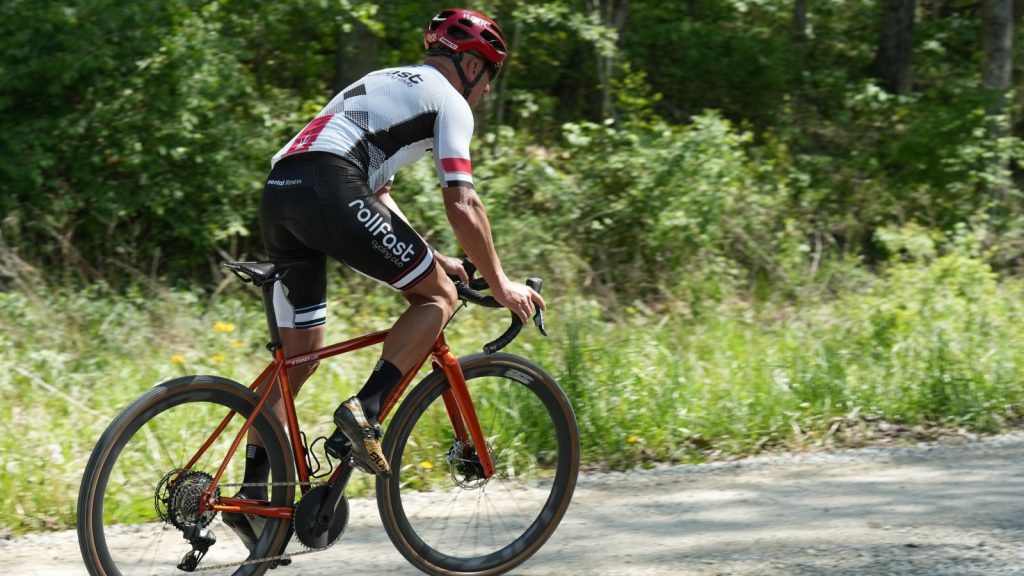
But power on the pedals isn’t only an engine problem. It’s also a delivery problem. You can have a strong, well-trained motor and still leak watts because the muscles driving your stroke fire slightly out of sequence: glutes a beat late, quads and hamstrings fighting each other through the dead spot, calf doing work it shouldn’t. Every one of those mistimings is a small tax. Pay it 5,400 times an hour (that’s 90 rpm) and it adds up to real, measurable power lost. Power your aerobic system already paid for.
That’s why the timing research is such a big deal for Masters riders specifically. The 4% didn’t come from a bigger heart or more mitochondria. It came from better coordination of fitness the rider already owned. You’re not buying a new engine. You’re fixing the transmission.
Why this is a Masters story, not a pro one
Here’s the part mainstream cycling media skips. A 24-year-old who’s been racing since juniors has a deeply grooved pedal stroke, built on tens of thousands of hours of high-quality reps. Their motor patterns are about as clean as they’re going to get. There isn’t much neuromuscular slack left to recover.
The 52-year-old who came to cycling at 40, rides mostly steady tempo, and has never done a structured drill in his life? He’s got slack everywhere. Years of riding one cadence at one intensity grooves an efficient-enough pattern that’s nowhere near optimal, and never gets challenged. That’s not bad news. That’s the opportunity. The rider with the messier stroke has the most free watts to reclaim, and the older, longer-but-narrower training history is exactly the profile that’s leaving them on the table.
This is the same logic behind why Rollfast throws out the 20-minute FTP test in favor of a dual-effort VO₂ method. Measure the wrong thing with a blunt tool and you train the wrong variable. Measure correctly, actually look at how the stroke is built, and you find the lever everyone else is walking past.
What “training the wiring” actually means
You can’t fix coordination by riding more of the same. Junk miles at your one comfortable cadence just re-groove the pattern you already have. You have to deliberately challenge the stroke: first by loading it, then by speeding it up. Three handles, in the order we’d actually run them:
1. SFR, Salite Forza Resistenza (Italian for “strength endurance climbs”; low cadence, high force). Find a steady climb, drop into a big gear, and grind it out seated at 50-60 rpm, controlled, for 3-5 minutes at a time. With no momentum to coast through, every dead spot in your stroke shows up. You feel exactly where the chain goes slack and where a muscle quits early. SFR forces the whole stroke to engage and recruits the glutes and hams in the right order under real load. This is the “high force, low cadence” corner of Rollfast’s Power Quadrant.
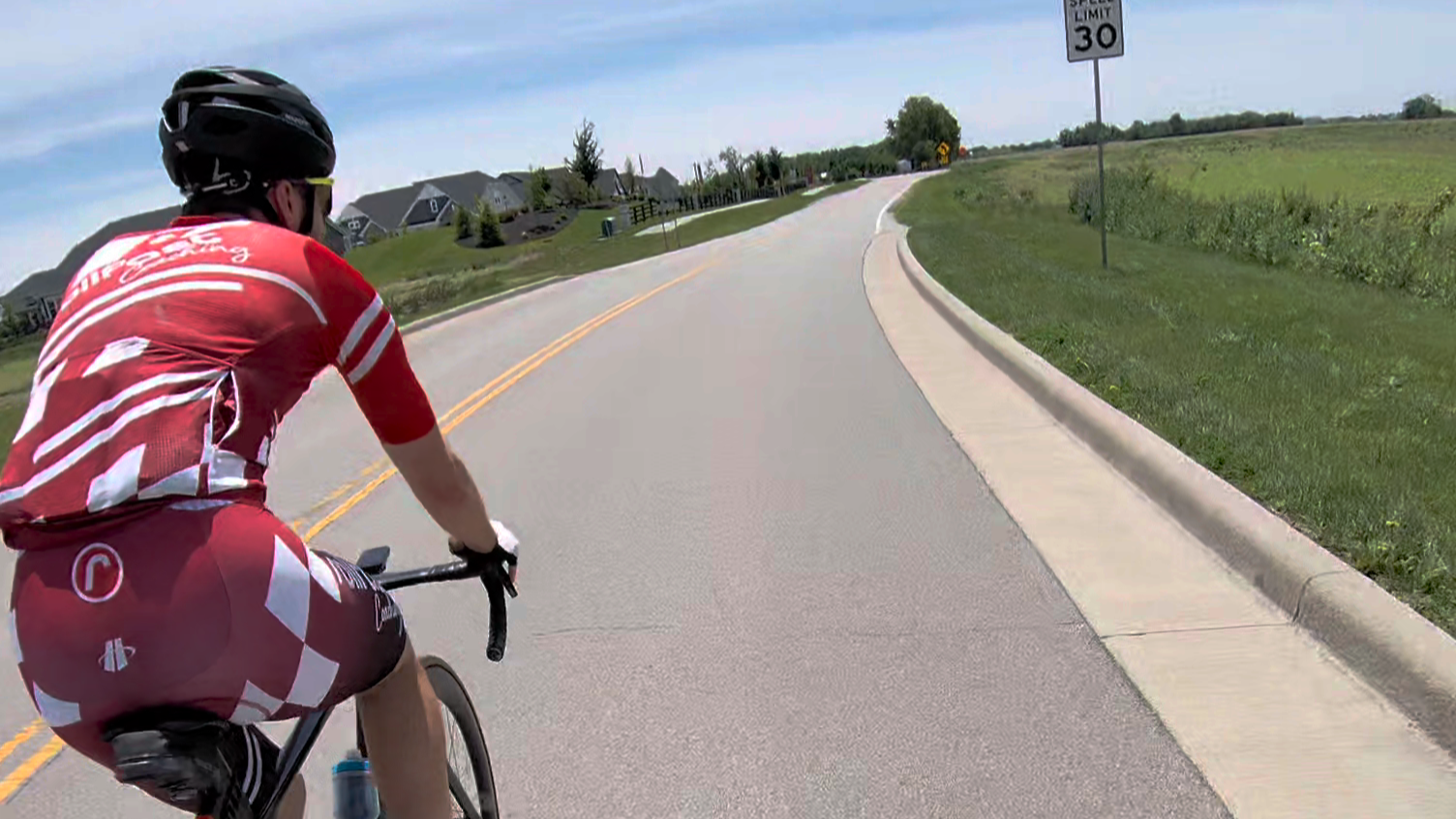
2. High-cadence spin-ups, right after the SFR. Spin up to 110-120 rpm held smooth for 30-60 seconds, quiet upper body, no bouncing in the saddle (bouncing is the mistiming made visible). The order is the whole point. We don’t do isolated one-leg drills; in our experience they don’t transfer to the road nearly as well as this pairing does. Loading the stroke heavy and slow, then immediately firing it fast and light, is how you build the neuromuscular connection: the same low-cadence-to-high-cadence transfer (our Q2→Q4 work) we program into Rollfast plans. SFR teaches the muscles to fire hard and in sequence; the high-cadence work right behind it teaches them to fire fast in that same sequence.
3. Strength that transfers to the stroke. This is where Speed and Strength shake hands. Heavy, low-rep work (squats, deadlifts, step-ups) doesn’t just build force; it teaches the glutes and hips to fire on time and in the right order. A stronger, better-sequenced glute is the single biggest fix for a late-firing, quad-dominant stroke. Thirty consistent minutes, twice a week, beats sporadic hero sessions.
None of this requires a new FTP test to feel. The SFR-into-spin-up pairing is barely a dent in your weekly load, and over a few weeks it quietly hands back power your engine was already producing but failing to deliver.
The takeaway
Most Masters cyclists are trying to buy that next 4% with their lungs. A real piece of it is sitting in their pedal stroke, costing nothing more than a little attention and a couple of drills a week.
You spent years building the engine. Spend a few weeks fixing the wiring, and ride away with watts you already owned.
Sources:
- “Masters Cycling Training Report 2026” (Roadman Cycling): https://roadmancycling.com/
blog/masters-cycling-training- report-2026 - “Biomechanics of Cycling: The Smart Science of Pedal Efficiency 2026”: https://www.isst.co.in/2026/
05/25/biomechanics-of-cycling/

Related Posts
You’re Not Too Old for Intervals. You’re Just Spacing Them Wrong
Somewhere around your 50th birthday, the advice changes. Training partners, forum threads, even well-meaning coaches start telling you the same thing: ease off the hard stuff. You're not 25 anymore. Stick to Zone 2 and ride your age. It's the most comfortable bad advice in cycling, and the 2026 VO₂max research says it's wrong on the part that matters most. Masters athletes respond to high-intensity intervals as well as