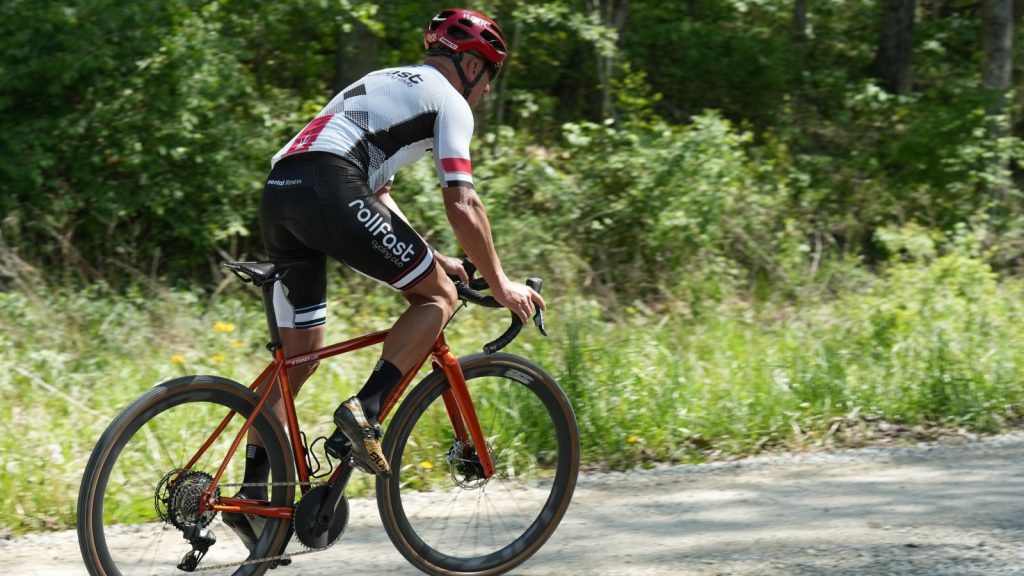
Vitamin D is your missing performanc lever.
You track your power. You probably track HRV. You might even know your last cholesterol number. But ask a room full of Masters cyclists what their vitamin D level is, and most of them will go quiet. That silence is the problem, because for a rider over 40, few numbers touch as many of the systems that decide whether your training actually turns into fitness.
Here is the contrarian truth: vitamin D is the cheapest, highest-yield test in the entire Longevity pillar, and it is the one riders skip for years while they drop real money on aero socks and a power meter for the second bike.
It is not a vitamin. It is a pro-hormone.
Start by correcting the name. “Vitamin D” sounds like something you get enough of from a multivitamin and a bowl of cereal. In reality it behaves like a hormone, a pro-hormone your body converts and uses across muscle, bone, immune function, mood, and testosterone support. That last one matters to a Masters rider more than almost anything else on the panel. Your downstream sex hormones cannot be optimized when your vitamin D is sitting at a “normal” 35 ng/mL. The raw material simply is not there.
This is where Rollfast’s core methodology comes in, and it is the whole ballgame: Normal versus Optimal. Standard reference ranges were built for disease screening, not for performance. A lab flags you only when you are deficient enough to risk a clinical problem. It does not care whether you are optimized to absorb a hard training block, recover between VO2 sessions, and hold off the illness that torpedoes three weeks of your season. The reference range is a floor. You are not trying to clear the floor. You are trying to build a performance ceiling.
For 25-hydroxy vitamin D (25-OH), the marker you actually want measured, the Rollfast optimal target is above 80 ng/mL. Not “not deficient.” Not the low-30s your doctor shrugs at. Above 80. There is a large gap between those two worlds, and Masters cyclists live in it without knowing.
Why endurance athletes run low
Here is the cruel irony. The riders most likely to be deficient are often the most disciplined ones. If you do a lot of your volume indoors on the trainer through the winter, or you ride at dawn and dusk to fit training around work, or you are covered head to toe in kit when you are out, you are getting very little of the sun exposure that drives vitamin D synthesis. Add a northern latitude like Indiana, where the winter sun is too weak to do the job for months at a time, and you have a recipe for a quiet, chronic deficiency in exactly the athletes who think they are doing everything right.
You will not feel it as a single dramatic symptom. You will feel it as the silent tax: strength adaptations that never quite stick, recovery that drags a day longer than it should, and the head cold that takes you down every few weeks in the cold months. None of those scream “vitamin D.” That is precisely why it goes unmeasured for years.
The Longevity pillar, stated plainly
Rollfast’s third pillar exists because of one insight: for Masters athletes, the ceiling on progress is usually not the training plan. It is the internal system that determines whether the plan can be absorbed. When an athlete is grinding and not improving, the answer is almost always a biomarker lever, not another gray-zone endurance ride. Fix the right lever, do not just train harder.
Vitamin D is the clearest example of that principle. It sits in Category 4 of the Longevity Audit, micronutrient status, right alongside magnesium, ferritin, and B12. And unlike a lot of what we measure, the fix is genuinely cheap and fully in your control: sunlight when you can get it, real food, and targeted supplementation dialed to your actual number. You do not guess. You test, you correct, and you retest until you are in the optimal range and staying there.
What to actually do
First, get it measured. Add 25-hydroxy vitamin D to your annual blood panel. And there is no better time than right now: for anyone in the northern latitudes, July is when your level is likely sitting at its yearly peak, so a test today tells you your true ceiling — the best your number gets before it starts sliding through the fall and bottoms out in the dark months. If you are already doing a Longevity Audit with us, it is on there, interpreted against optimal ranges by Christine Tanner rather than the disease-screening floor, and folded into your Recovery Capacity Index, the single number that tells us how much training stress your body can safely absorb right now.
Second, aim for the target, not the minimum. Above 80 ng/mL is the goal. If you are at 30, you have found one of the highest-return fixes available to you, and it costs less than a set of tires.
Third, retest. Vitamin D is not set-and-forget. Levels swing with the seasons, especially at our latitude, so a number that looks great in September can quietly slide by February. Check it, adjust the dose, and hold the range through the dark months when you need the immune support most.
The point of Rollfast is not short-term heroics. It is being the 75-year-old who is still taking pulls and putting the hurt on the group ride. You do not get there by out-suffering your training. You get there by making sure the internal systems, the ones you cannot see and mostly forget to measure, are actually built to hold the work. Vitamin D is the one most riders test last. Move it to first.
Sources
- Rollfast Coaching internal reference: Biomarkers, Longevity and Performance Tracking (Category 4: Micronutrient Status; Vitamin D3 25-OH optimal >80 ng/mL; Normal vs. Optimal methodology)
- “How to Maximize Endurance and Longevity in Sports”, InsideTracker: https://www.insidetracker.com/
a/articles/how-to-maximize- endurance-and-longevity-in- sports - “Athletes Swear By These Biomarkers to Boost Longevity”, Hone Health: https://honehealth.com/edge/
athlete-biomarker-testing- longevity/

Related Posts
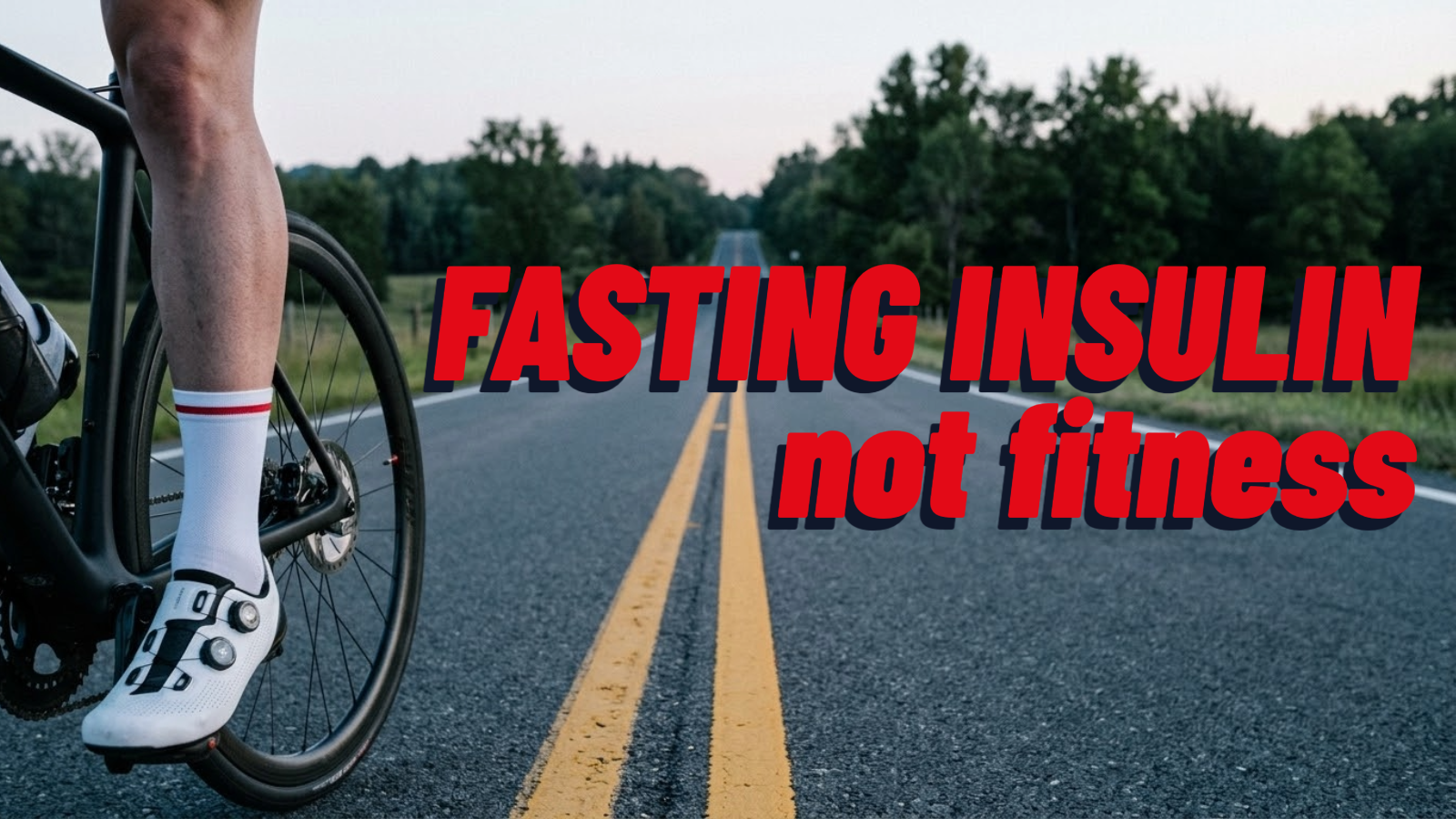
Looking the part did not mean they could switch fueling systems
Same VO2max. Same body fat. Only the insulin-sensitive men could switch fuels when more fat hit the bloodstream. Fasting insulin split them, not fitness. Mine went from 6.3 to 2.5 after I quit the nightly Mint Explosion pints.
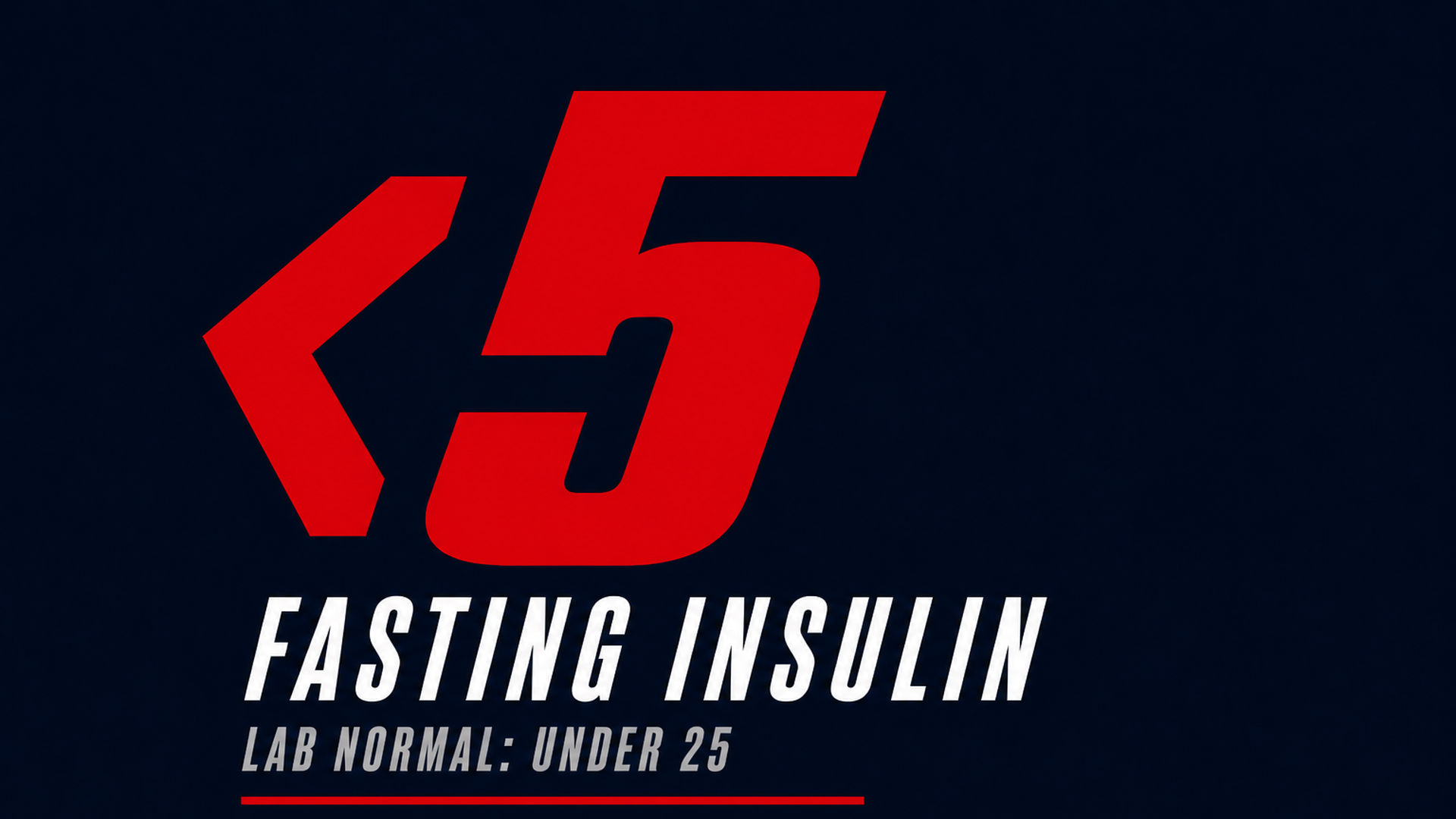
The Athlete’s Paradox: Fit Muscle, Sick Blood Work
Your legs can be insulin sensitive while your fasting insulin tells a different story, and only one of those shows up on a lab report. Masters riders who train hard and eat poorly off the bike are the ones most likely to get blindsided by metabolic dysfunction at 60.
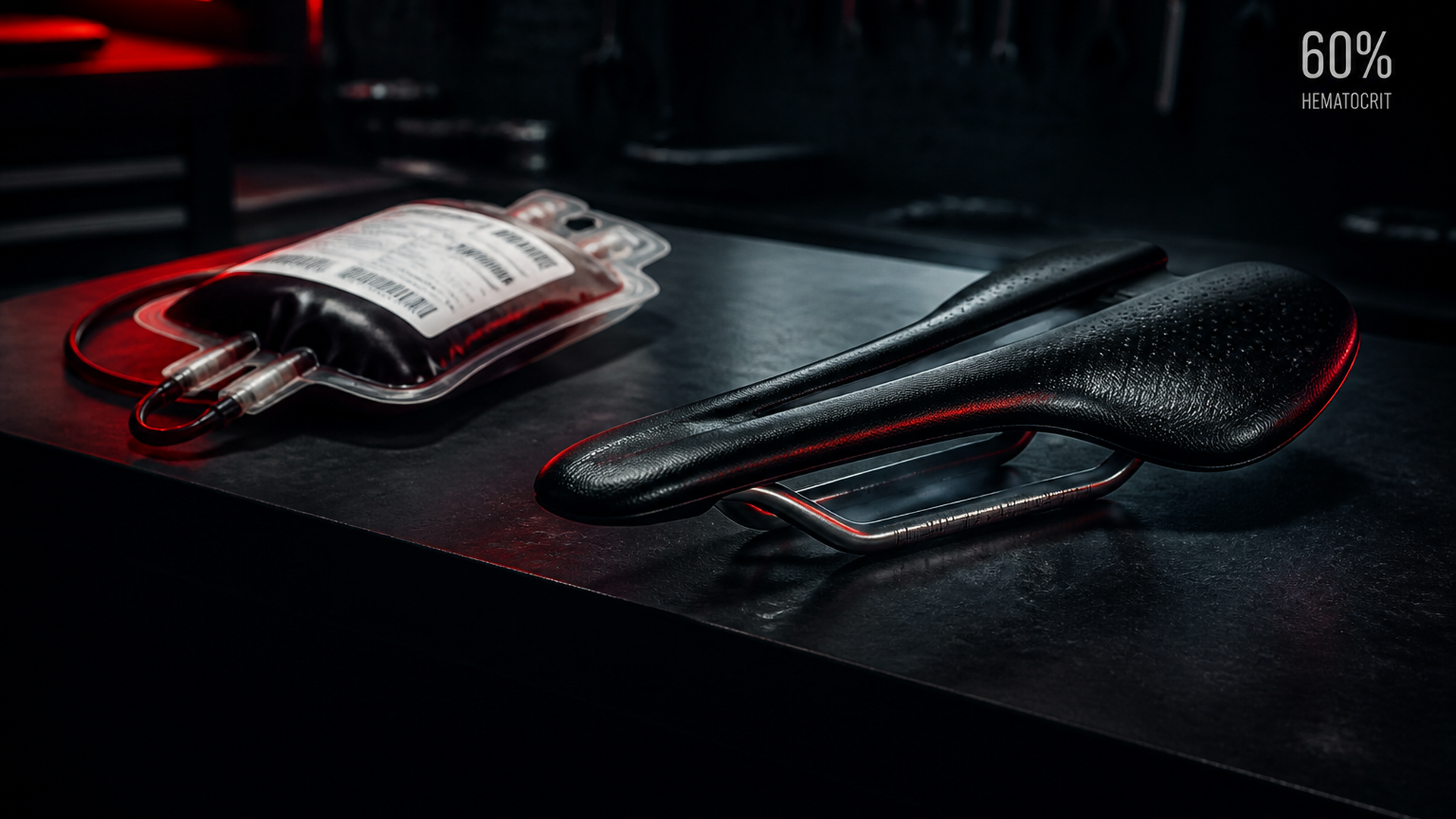
The Pint and the Saddle
On Monday 17 August I donated a pint of blood after a hematocrit of 60 percent, and I moved my saddle forward the same day. Claude went through the Strava files. Same speed. Heart-rate cost per watt down 5.8 percent on the steady laps. Here is the method, including the parts that did not work.