There Is No Carb Number. The UCI’s Own Data Ranges From 41 to 106 Grams an Hour.
Open almost any cycling nutrition article published in the last five years and you will find the same sentence: elite riders consume 90 to 120 grams of carbohydrate per hour. Sometimes it is phrased as a target. Sometimes as a ceiling to work toward. Either way, the implication is the same: more carbohydrate per hour is the direction every serious cyclist should be moving.
The UCI Sports Nutrition Project disagrees. So does the actual data behind that claim.
What the Research Actually Found
The UCI Sports Nutrition Project, published in the International Journal of Sport Nutrition and Exercise Metabolism in 2026, is the most comprehensive look at what professional road cyclists actually eat across an entire racing season. It covers on-bike carbohydrate intake, daily fueling totals, fluid intake, and the contextual factors that shape all of it.
The on-bike carbohydrate range reported across professional road cycling: 41 to 106 grams per hour.
That is not a range of amateurs versus elites. That is the same peloton. Same races, same categories of competition, same UCI license holders whose fueling data you are presumably trying to borrow when you shoot for 90 grams.
Daily carbohydrate intake across the same cohort ranged from 5.1 to 17.7 grams per kilogram of body mass. For a 150-pound rider, that translates to roughly 350 grams on the low end and 1,200 grams on the high end. The spread is not a rounding error. It is more than threefold, and the researchers say it plainly: intake should be periodized by discipline, role in the team, stage demands, environment, and individual preference.
The sport took a range and turned it into a rule. The rule escaped into media, got repeated enough that it started to feel like physiology, and now it is the default target for riders who have almost nothing in common with the riders it was originally measured on.
Who the 90 to 120 Number Actually Describes
The high end of that range, roughly 90 to 120 grams per hour, does exist. It describes Grand Tour specialists at the peak stages of a three-week race. These are riders weighing somewhere around 140 to 160 pounds, racing 25 to 30 hours per week at intensities that demand near-continuous glycolytic output, supported by team soigneurs, a full medical staff, and years of gut training specifically designed to tolerate high-dose carbohydrate delivery during exercise.
Their metabolic job in week three of the Vuelta is not remotely similar to your metabolic job on a Saturday morning crit or a three-hour Sunday group ride.
The gut adaptation required to absorb 90 or 100 grams of carbohydrate per hour without cramping, bloating, or GI distress is real. It is trainable. It is also something those riders have spent years building specifically to tolerate race-week fueling demands. Borrowing the output number without the years of gut training behind it is a reliable path to a very bad hour somewhere around mile 40.
The Cost Nobody Talks About
When a Masters rider who trains eight hours a week consistently overfeeds carbohydrates relative to session demand, two things happen that nobody in the “eat more carbs” conversation wants to discuss.
First, gut distress. The intestinal transporters that move glucose and fructose out of the gut and into the bloodstream are not unlimited. The GLUT5 and SGLT1 pathways together max out somewhere around 60 grams per hour for most people who have not specifically trained them. Push past that on a Saturday ride where your intensity does not even require it, and you are feeding bacteria, not muscles.
Second, blunted fat oxidation. This one is more insidious. The human body is extremely good at burning fat at low to moderate intensities, but only if it is allowed to. Consistently flooding the system with exogenous carbohydrate during lower-intensity training rides suppresses the hormonal environment that develops fat-burning capacity. Insulin stays elevated. Fat mobilization stays suppressed. Over months and years, the rider who has been obediently hitting 90 grams per hour on every ride actually becomes less metabolically flexible, not more. Easy rides start to feel like they require feeding. They do, because the metabolic machinery for fat oxidation has been quietly idling instead of developing.
For a 50+ year old rider whose long-term performance depends on fat oxidation capacity, injury resilience, and the ability to handle volume without chronic inflammation, this is not a minor tradeoff.
The Right Frame: Fuel the Demand of the Session
Rollfast Formula One Nutrition approaches this differently. The question is not “how close to 90 grams can I get?” The question is “what does this specific session actually demand?”
That reframe changes everything.
A two-hour easy endurance ride at Zone 2 does not require 90 grams of carbohydrate per hour. It may not require any on-bike carbohydrate, depending on the rider’s metabolic flexibility and how they fueled beforehand. Riding that session without a feed bag is not under-fueling. It is session-appropriate fueling, and it is actively building the fat oxidation capacity that makes everything else easier.
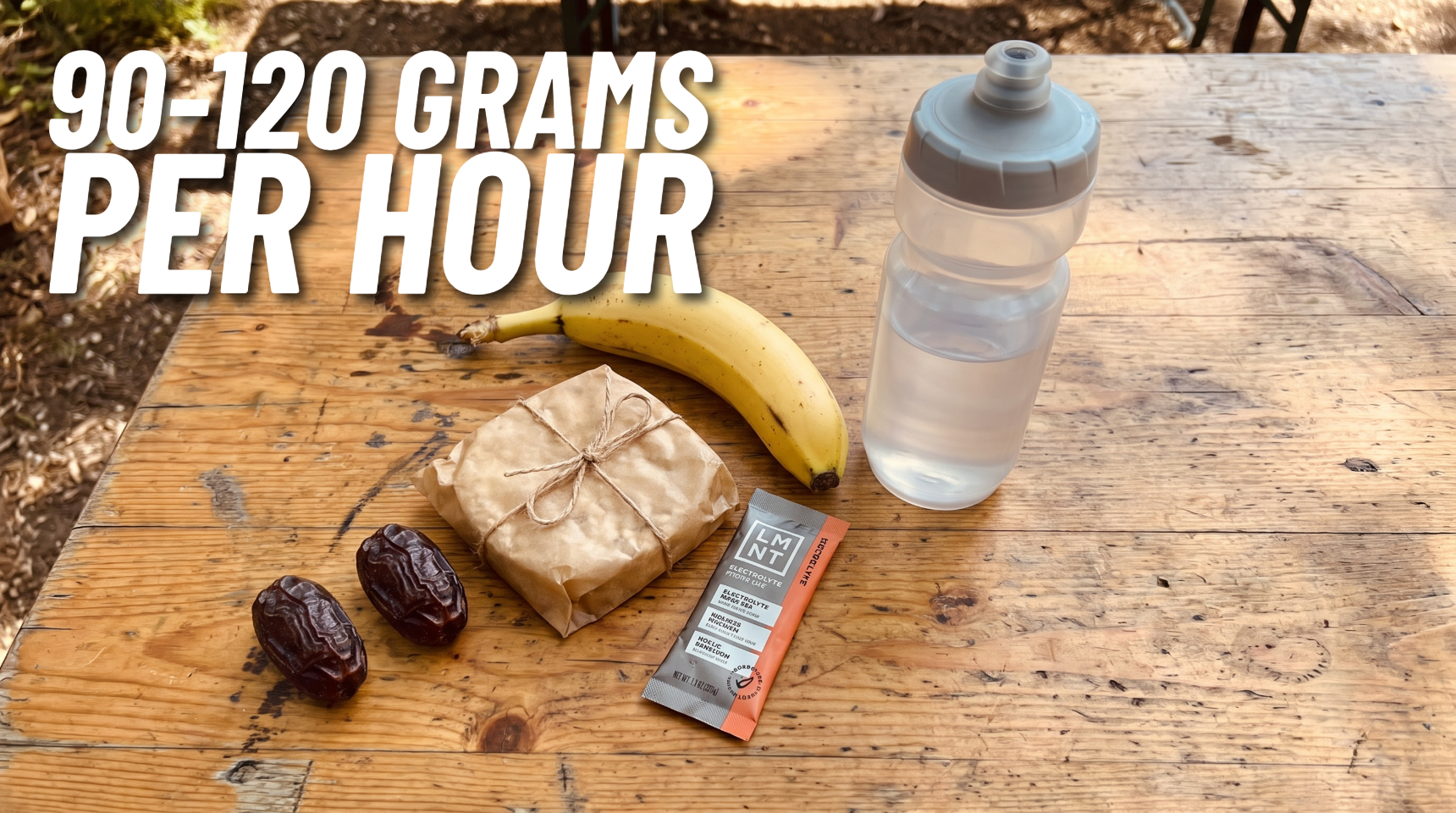
A hard four-hour ride with sustained tempo efforts, threshold intervals, or race simulation is a different story. Carbohydrate becomes genuinely useful, and real food delivers it without the synthetic sweetness and osmolality issues that come with gels and chews consumed in bulk. Dates work. A rice cake works. A banana works. These foods provide roughly 25 to 50 grams of carbohydrate per serving, which maps well to the roughly 50-gram-per-serving practical threshold where most riders absorb carbohydrate cleanly without gut interference.
LMNT electrolytes alongside real food handles the sodium and hydration side of the equation, which matters more at higher intensities and in heat than most carbohydrate-focused conversations acknowledge.
Off the bike, protein is the anchor. At 1.5 grams per pound of body weight per day, distributed across meals to hit at least 50 grams per serving for muscle protein synthesis, protein does the work that excessive carbohydrate intake often gets credit for: supporting recovery, preserving lean mass, and keeping the rider actually functional the next day.
Periodize the Carbohydrate, Not Just the Training
The UCI report makes the periodization point directly. On-bike carbohydrate intake should match the demands of the specific discipline, the specific stage, the environmental conditions, and the individual rider’s response. A flat stage domestique doing tempo work in the front group for six hours needs a different fueling plan than a climber conserving glycogen for one 45-minute effort at the end. They are both “pro cyclists.”
The same logic applies across a Masters rider’s training week. The Tuesday evening 90-minute group ride, the Thursday threshold session, the Saturday crit, and the Sunday long ride are four different metabolic jobs. They warrant four different fueling plans, not one number applied to all of them.
Metabolic flexibility, the ability to shift between fat and carbohydrate oxidation depending on intensity and availability, is trained over time. It shows up in easy rides that feel genuinely easy, in late-race legs that hold up longer, and in the absence of the bonk-and-recover cycle that haunts riders who have trained their bodies to expect a steady glucose drip.
The Actual Takeaway
The 41 to 106 gram range reported by the UCI Sports Nutrition Project is not a problem to be solved by finding the right number in the middle. The spread is the finding. It is what individualization looks like in a real dataset.
The number that leaked into cycling culture was always the ceiling, not the average, and it was always describing a specific rider in a specific context. That rider is not you, unless you are currently in week three of a Grand Tour and have a soigneur handing you bidons.
For most Masters cyclists riding eight to twelve hours per week, the useful shift is away from chasing a per-hour target and toward asking what the next session actually demands. Some sessions need fuel. Some sessions need the metabolic stress of riding without it. Most sessions need less carbohydrate than the cycling internet says.
Fuel the demand. Build the flexibility. Let the data be a range.
Sources
UCI Sports Nutrition Project: Race Nutrition for Road Cycling. International Journal of Sport Nutrition and Exercise Metabolism, 2026. journals.humankinetics.com/view/journals/ijsnem/36/3/article-p215.xml

Related Posts
Looking the part did not mean they could switch fueling systems
Same VO2max. Same body fat. Only the insulin-sensitive men could switch fuels when more fat hit the bloodstream. Fasting insulin split them, not fitness. Mine went from 6.3 to 2.5 after I quit the nightly Mint Explosion pints.
The WorldTour Lie
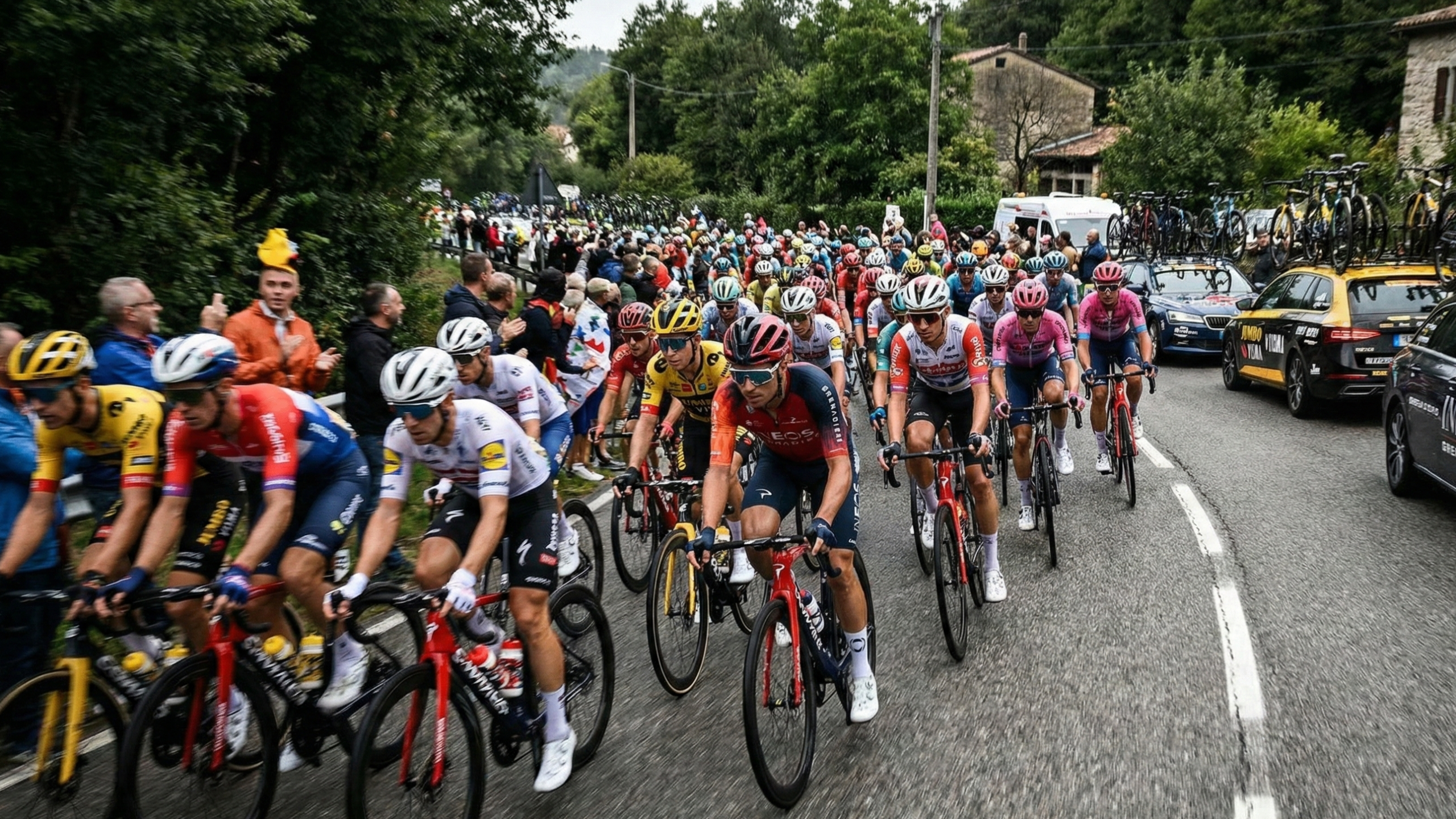
A pro cyclist is like a Formula 1 engine: tuned for absolute maximum output, but designed to be scrapped after just a few races. They are paid millions to mortgage their health for short-term speed. You are doing it for free. In this post, we break down why copying 'Pro' strategies is the fastest way to blow a gasket, and how to build a 'Million-Mile
Why Pro Training Doesn’t Work for You
Every few months a story emerges about a pro cyclist pushing human limits by logging 30-hour training weeks, burning through thousands of calories, and surviving on little more than gels and grit. This story in Velo about Quinn Simmons is the latest example: huge volume, little gym work, and relentless aerobic load. It’s impressive… but for a Masters athlete, it’s a blueprint for breakdown. At Rollfast