

Heart Fluttering on the Bike After 50? What a New Study of Veteran Cyclists Found About AFib
Longevity · Heart Health
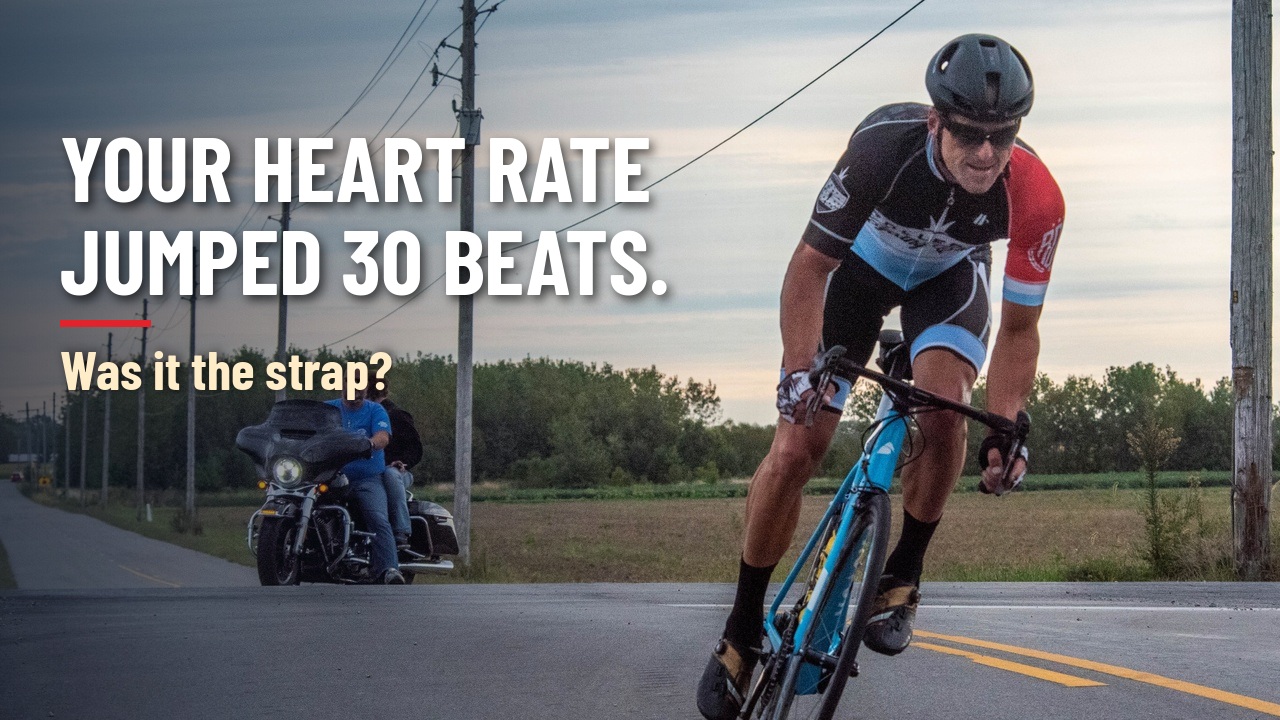
You are riding steady, nothing hard, and your heart rate jumps 30 beats for no reason. Or you are sitting on the couch that evening and your chest feels like it skipped, then fluttered. Most riders blame the chest strap and keep training.
Sometimes it really is the strap. But if you have been riding hard for decades, it is worth knowing what atrial fibrillation (AFib) is, what a new study of veteran cyclists says predicts it, and what your options look like if it shows up. I have been through it myself, so this one is personal. It is not a diagnosis or a reason to stop riding. It is a guide so you know when to pay attention and what questions to ask.
What AFib Is, in Plain Terms
Your heart has two small upper chambers (the atria) and two larger lower ones. Normally they squeeze in a steady rhythm. In AFib, the upper chambers lose that rhythm and quiver instead of squeezing cleanly.
AFib matters because blood can pool in a quivering chamber and form clots, which raises stroke risk. It is also very treatable once it is found. The problem is that plenty of people never feel it.
What the New Study Found
The VENTOUX study, published in 2026 in the European Journal of Preventive Cardiology, followed 106 healthy male cyclists and triathletes aged 50 and over. Every one of them had trained at least 10 hours a week for at least 15 years, and none had known heart disease at the start. Each got a small implanted heart monitor that records rhythm around the clock, and their training was tracked through their power meters, head units and heart rate straps.
Here is what happened over a median of about 3.4 years:
- 16 of 106 riders (about 1 in 7) developed AFib.
- 15 of those 16 had it come back. It was rarely a one-time event.
- Only half eventually felt symptoms. The other half had no idea until the monitor caught it.
- The first episode often came at night (6 of 16), and the median gap between a workout and the first episode was about 19.5 hours. It was not usually triggered mid-ride.
- Average heart rate during AFib was 76 bpm. That is not a dramatic spike.
- One rider with AFib had a stroke.
Training type, volume and intensity did not differ between the riders who got AFib and those who did not. What stood out was that the riders with AFib were older and had higher blood pressure. The authors suggest years of accumulated hard training may play a role, rather than what you did last week. One honest limit: this was a small study of men only.
“Athlete’s Heart” and My Own AFib
Years ago I had AFib. The cardiologist I saw told me not to worry. He said I had “athlete’s heart,” the way the heart remodels after years of endurance work: bigger chambers, a slow resting rate and a strong vagal tone (the brake pedal on your heart rate). To this day, when I take a resting EKG my heart looks out of rhythm. When I do a stress test and my heart rate climbs, it settles right back into rhythm.
That pattern is common in long-time endurance athletes, and it is part of why the episodes in VENTOUX tended to show up at night and the day after training, when the heart is slow and the brake pedal is on. It also means a trained heart can look strange on a test that was built around non-athletes. That cuts both ways: “athlete’s heart” is a real explanation, but it should be a conclusion a doctor reaches after looking, not a reason to stop looking. Remember, one rider in that study had a stroke.
What I learned over the next few years mattered more than the label. My episodes had triggers, and once I found them, I could control them.
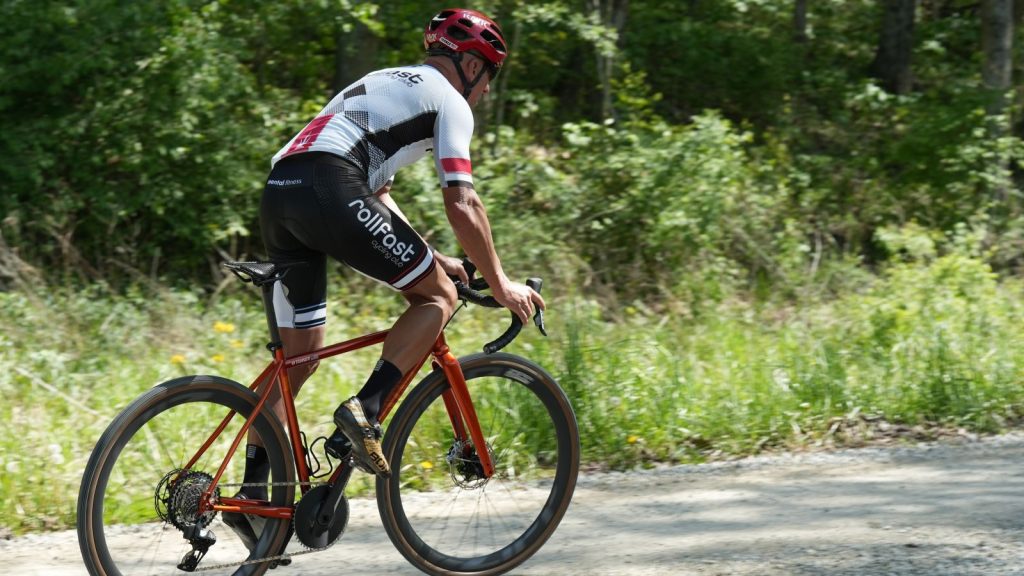
Training stress plus life stress. I put on the Rollfast Gran Fondo for seven years, and I also rode it competitively. One year I was training at a very high level while carrying an enormous amount of stress organizing an international event in my own city. About 50 miles into that year’s Gran Fondo, I went into my first episode of AFib, in the middle of the event I was running. That is the opposite of the typical pattern in the study, which is a good reminder that an average is not your heart.
After that ride, my coach and I talked it through and landed on one fix: reduce the training load. We applied it the next year leading into the event, and the AFib stopped.
That fits what researchers see. A Canadian study that followed nearly 6,000 office workers for 18 years found that people with high job strain (high demands, little control) had an 83% higher risk of AFib, and about double the risk when job strain came with feeling unrewarded for the effort. Not every study agrees, but your heart does not keep separate books for intervals and deadlines. It is all load.
What was on my plate. Oxalates are compounds found in many “healthy” plant foods like spinach, almonds, sweet potatoes and a lot of berries. For me, they are a trigger. One morning I switched my breakfast to mixed berries with rice, and I had an episode that day. I am not the only one at Rollfast with that story: Tom Tokarcik’s palpitations stopped within a couple of weeks of cutting high-oxalate foods, which we wrote about in How a Rollfast Blog Post Solved a Heart Mystery. To be clear, there is no large trial linking oxalates to AFib. This is personal experience, and that is exactly the point: your triggers are yours, and you find them by tracking.
There is research support for that approach. In the I-STOP-AFib trial, people with on-and-off AFib tested their own suspected triggers in one-week blocks. Afterward they had about 40% fewer AFib episodes than people who only tracked their rhythm. Alcohol was the one trigger that showed up most clearly across the group.
What About Ablation?
Ablation is the treatment everybody jumps to. A cardiologist threads a catheter into the heart and scars the small area where the misfiring signals usually start, most often around the pulmonary veins. Two riders I know have had ablations in the last year, with results ranging from some improvement to none at all. Personally, I am not a believer in it as a first answer. But you deserve the actual numbers, not just my opinion:
- A 2023 review of nine studies (1,129 patients) found ablation works about as well in endurance athletes as in everyone else. About 60% stayed free of AFib after one procedure, rising to 77% after repeat procedures.
- In one large group of athletes, about one in three needed a second ablation, and success after a single procedure faded from 70% at one year to 52% at three years.
- Earlier ablation did better. Athletes treated within two years of diagnosis had far fewer recurrences than those who waited longer.
- The PVI-SHAM-AF trial, published in The Lancet in 2026, compared real ablation with a sham procedure. Ablation did reduce AFib (73% free at six months vs. 52%), but quality of life improved almost as much in the sham group. A good part of how people feel afterward may come from things other than the procedure itself.
The Downside Nobody Mentions at the Consult
I have heard from several athletes who say they never got back to the same level after an ablation. I wanted to know if that holds up, and the honest answer is: sometimes.
- Not everyone gets their old level back. A 2026 review of six studies of athletes (386 people) found 97% returned to exercise after ablation, but only 83% got back to their previous level or intensity. That is roughly 1 in 6 who did not.
- Repeat procedures cost fitness. A 2026 study from a Boston sports cardiology program tested VO2peak (the top end of your aerobic engine) before and after treatment in 33 endurance athletes. A first ablation held fitness steady on average, but athletes who needed a redo lost about 9% of their VO2peak, and 6 of the 33 lost more than one MET (a drop most riders would feel on a climb).
- Scar tissue can stiffen the heart. Ablation works by scarring the left atrium. In one series of 1,380 patients, 1.4% developed “stiff left atrial syndrome,” where the scarred chamber stops filling well and causes breathlessness on effort. More scarring raised the odds.
- The procedure has real risks. A review of 89 studies (15,701 patients) found serious complications in about 2.4% of first ablations, mostly bleeding around the heart and problems at the catheter site, with stroke or mini-stroke in 0.17%.
To be fair to the other side, the same Boston study found that athletes treated with medication alone lost about 11% of their VO2peak, so untreated or poorly controlled AFib costs fitness too. But that is the reason I do not like ablation as a first answer: each extra procedure adds scar and risk, and it does not touch the triggers that started the problem. For me, finding and removing those triggers came first.
So ablation is a real tool, and for some riders it is the right one. It is also frequently not a one-and-done fix, and it does nothing about the blood pressure, stress load or food triggers that may have set the stage. If a doctor recommends one, ask what success looks like for your type of AFib, how often they repeat the procedure, how their athlete patients perform afterward, and what else you should change at the same time.
What AFib Can Feel Like
If you get any of these, write it down and talk to a doctor:
- A fluttering, flopping or “fish in the chest” feeling
- A sudden heart rate jump that does not match the effort, especially one that stays high after you ease off
- An irregular pulse when you check your wrist or neck at rest
- Unusual breathlessness on an effort that is normally easy
- Dizziness, lightheadedness or a sudden drop in power with no obvious reason
And remember the study: half the riders felt nothing. No symptoms does not mean no AFib.
A random spike to 210 bpm for ten seconds in the first mile of a winter ride is very often a dry chest strap. What is worth noticing: spikes that repeat with a fresh strap, a reading that stays high after you stop pedaling, or a number on the screen that matches a strange feeling in your chest. Save those ride files for your doctor.
Your Checklist This Week
Check your blood pressure at home.
Use an upper-arm cuff, sit quietly for five minutes, feet flat, arm supported at heart level, and take two readings in the morning and two in the evening for a week. Write them down.
Learn to take your own pulse.
Two fingers on your wrist for 30 seconds at rest. Note whether the beat feels steady or irregular.
Keep a trigger log.
Date, time, how it felt, how long it lasted, plus what you ate, what you drank, how you slept, your training load and your stress that week. Patterns show up faster than you think.
Look at your total load, not just your training.
If work or life stress is spiking, back off the training stress for a block. It worked for me.
Book a doctor visit if anything above shows up.
Bring your blood pressure log, trigger log and ride files.
When to See a Cardiologist
See a doctor soon if you notice repeated fluttering, an irregular pulse at rest, or home blood pressure readings that keep coming in high. Ask for a cardiologist who sees athletes, and tell them how many years and hours you have trained.
Get help right away for chest pain, fainting, sudden weakness or numbness on one side, trouble speaking, or breathlessness out of proportion to the effort. Stop riding and call for help.
The Takeaway
Keep riding hard. Learn your blood pressure and your pulse, track your triggers, and treat training stress and life stress as one bucket. And if you are offered a procedure, go in knowing the real numbers.
Sources
European Journal of Preventive Cardiology 2026. “The timing and relationship of atrial fibrillation with exercise in veteran male endurance athletes.”
Journal of the American Heart Association 2024. “Psychosocial Stressors at Work and Atrial Fibrillation Incidence: An 18-Year Prospective Study.”
JAMA Cardiology 2022. “Individualized Studies of Triggers of Paroxysmal Atrial Fibrillation: The I-STOP-AFib Randomized Clinical Trial.”
Journal of Interventional Cardiac Electrophysiology 2023. “Atrial fibrillation catheter ablation in endurance athletes: systematic review and meta-analysis.”
JACC: Clinical Electrophysiology 2020. “Catheter Ablation: AF Outcomes of Pulmonary Vein Isolation in Athletes.”
American College of Cardiology, ESC Congress 2026 coverage of PVI-SHAM-AF (The Lancet).
JACC 2026 (ACC.26 abstract). “Catheter Ablation for Atrial Fibrillation in Athletes: A Systematic Review and Meta-Analysis of Return to Play and Repeat Ablations.”
Journal of the American Heart Association 2026. “Preserved Cardiorespiratory Fitness After Catheter Ablation in Athletes With Atrial Fibrillation.”
Heart Rhythm 2011. “Stiff left atrial syndrome after catheter ablation for atrial fibrillation: Clinical characterization, prevalence, and predictors.”
JACC 2023. “Procedure-Related Complications of Catheter Ablation for Atrial Fibrillation.”
Rollfast Coaching. “How a Rollfast Blog Post Solved a Heart Mystery.”
Speed · Strength · Longevity
The Longevity Audit
The Longevity Audit gives you a look inside your body at the markers tied to heart attack and stroke risk. Christine Tanner is one of the best in her field at reading bloodwork from every angle and actually listening to you, instead of printing a report and pointing at a “normal range” built for everybody.

Related Posts
Coughing After Cold Rides? Your Lungs Are Telling You Something
You finish a cold, hard ride and spend the next hour coughing, or your chest feels tight on the drive home. That is not toughness leaving your body. It is your airways reacting to cold, dry air, and a few simple changes to your winter week can calm it down.
Looking the part did not mean they could switch fueling systems
Same VO2max. Same body fat. Only the insulin-sensitive men could switch fuels when more fat hit the bloodstream. Fasting insulin split them, not fitness. Mine went from 6.3 to 2.5 after I quit the nightly Mint Explosion pints.
The Athlete’s Paradox: Fit Muscle, Sick Blood Work
Your legs can be insulin sensitive while your fasting insulin tells a different story, and only one of those shows up on a lab report. Masters riders who train hard and eat poorly off the bike are the ones most likely to get blindsided by metabolic dysfunction at 60.
Rodney Toad Miller
Thanks for insight and statistics.
Coach Tanner
Sure thing Toad, this is so common and a scary thing for many cyclists. I’m always an open book with my experiences and opinions.
Thank you for reading!