Your Lower Back Hurts After Two Hours. Stretching Probably Isn’t the Fix.
Strength · Longevity
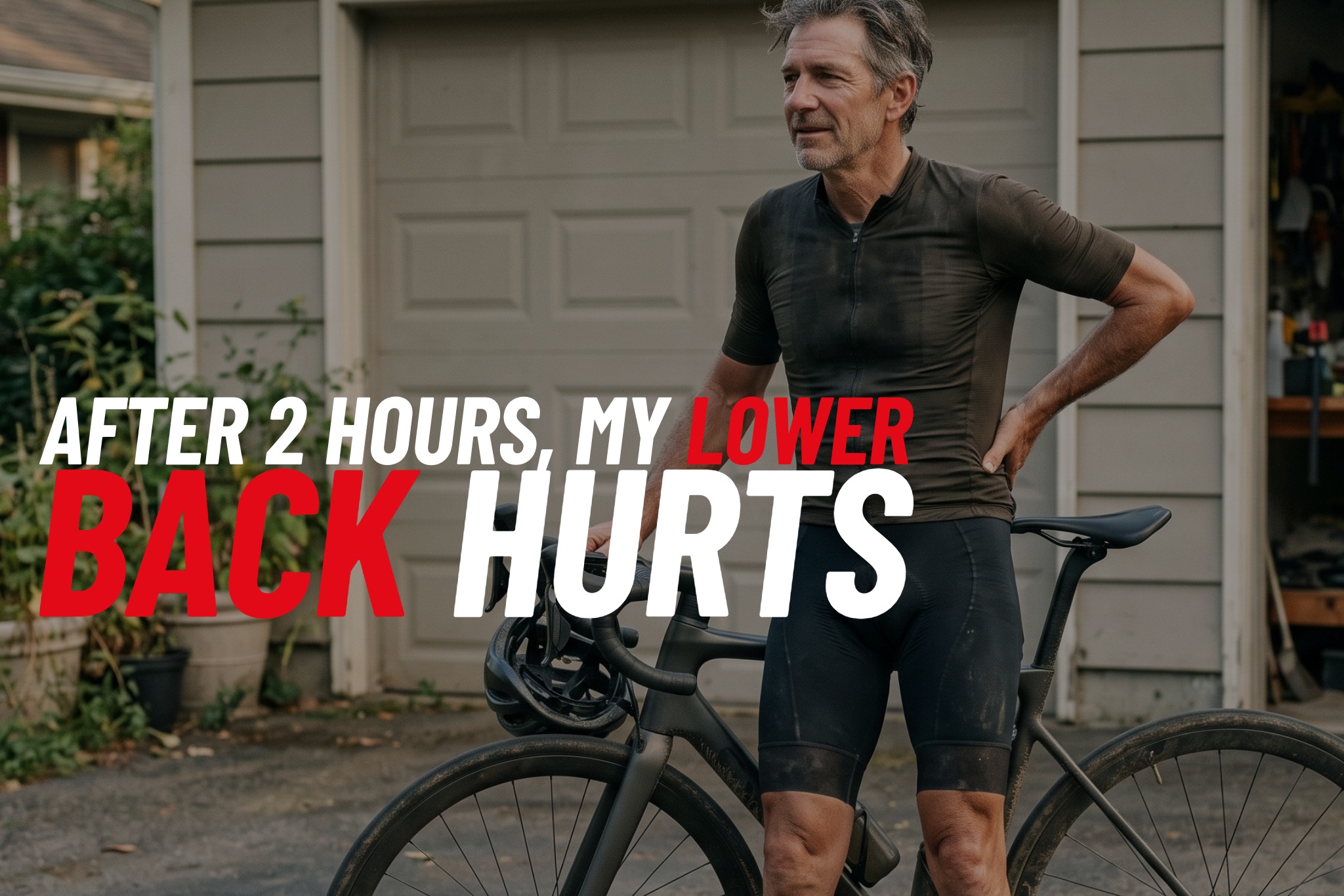
You hit the two-hour mark and it starts: a dull ache low in the back, right at the beltline. You shift around in the saddle, stand up for a minute, maybe reach back for a stretch at the next stoplight. By hour three you’re riding through it. By the time you get home, you’re wondering whether you’re just getting old.
You’re not. But the stretching isn’t going to fix it either.
What the research actually shows
A systematic review that pooled findings from eight biomechanical studies on cyclists with low back pain found something that surprises most riders: flexibility was not the distinguishing factor. The riders in pain weren’t measurably less flexible. What separated them was weaker back-extensor endurance, asymmetrical core activation, and greater lumbar flexion on the bike, which often traced back to a handlebar that was too low.
A 2026 study of 41 road cyclists added another piece. Core endurance (specifically how long the trunk muscles can hold a position under load) and pelvic tilt independently predicted back-pain disability scores. Not hamstring tightness. Not hip flexor flexibility. Trunk endurance and how your pelvis sits on the bike.
Put both findings together and a pattern emerges: lower back pain in cyclists is largely an endurance problem in the trunk, made worse by a position that loads the lumbar spine beyond what those muscles can hold for two-plus hours.
Stretching the hamstrings before a ride doesn’t train those muscles to hold up. It doesn’t change the position. It feels productive, and it does nothing.
| What riders reach for | What actually separated them |
|---|---|
| Hamstring tightness | Back-extensor endurance |
| Hip flexor flexibility | How the pelvis sits on the bike |
| Stretching the hamstrings | A bar that’s too low |
Why long rides are the test the back keeps failing
The trunk muscles, primarily the erector spinae, multifidus, and deep stabilizers of the lumbar spine, are anti-fatigue structures. Their job on the bike isn’t to generate force; it’s to maintain position under sustained, low-level load for hours. That’s a specific kind of fitness, and most riders never train it.
Gym work in the typical sense doesn’t cover it either. A few sets of sit-ups or planks held for 30 seconds is not the same stimulus as holding a neutral lumbar position for three hours at 85 rpm. The gap between what you train in the gym and what the bike demands is where the pain lives.
Add a handlebar that sits two or three centimeters lower than your mobility can comfortably support, and you’re amplifying lumbar flexion through every pedal stroke. The muscles work harder to try to stabilize a position they can’t quite reach. After 90 minutes they start to lose the argument.
The fix: train the trunk like an endurance organ
Because this is an endurance deficit, the training response needs to match. You’re not trying to get a stronger back in the six-rep-max sense. You’re training the back and core to resist fatigue over a long duration, the same way you train your aerobic system.
Back extensions
Back extensions (hyperextensions). This is the single most underused exercise in a cyclist’s program. Done on a bench or GHD machine, back extensions train the erector spinae through their actual working range with a load that progressively challenges endurance. Start with bodyweight for three sets of 12–15 reps with a controlled tempo. Build toward weighted reps over weeks. The goal is a back that can hold position at hour two the same way it holds position at minute ten.
Carries
Farmer carries and suitcase carries (one-sided, so you have to resist lateral lean) train the deep stabilizers the way the bike demands them: under load, in motion, over time. Two or three lengths of a parking lot with a heavy kettlebell or dumbbell is enough. Suitcase carries in particular hit the quadratus lumborum, a muscle that takes a beating in an asymmetric bike fit.
Anti-rotation holds
Pallof press variations (a cable or band pulling you sideways while you hold a stable midline) train the core to resist rotational and lateral stress, which is exactly what it faces during hard climbing efforts and out-of-the-saddle sprints. Hold for 3–5 seconds per rep, 10–12 reps per side.
These are not core “exercises” in the crunches-and-six-pack sense. They are trunk endurance training for a sport that demands trunk endurance. Do them two days per week, year-round, not just when your back is already complaining.
Check the position before you do anything else
All the back work in the world is a harder road if your handlebar is set up to fight against you. A stack that puts you in sustained, maximal lumbar flexion means your back muscles are working at a mechanical disadvantage from kilometer one.
The clue is usually in your ride data and your posture off the bike. If you’re rounding heavily through the lower back to reach the bars, if your pelvis is tilting posterior (think: tucked tail) on the saddle, you’re likely grinding against a position problem as much as a fitness one.
The fix doesn’t always mean raising the bar. Sometimes it’s a shorter stem, a different saddle setback, or a saddle tilt correction. The point is that bike fit and back health are connected, and if you haven’t had a proper fit in the last three to four years, or if your body has changed (weight, flexibility, age), the current setup may no longer match you.
On the ride itself
Two adjustments that cost nothing and help immediately:
Stand up, easy
First, break up long efforts with short periods of out-of-saddle riding, not sprinting, just standing and pedaling easy for 20–30 seconds every 15–20 minutes. This changes the lumbar load angle, moves fluid back into the discs, and gives the stabilizers a brief reset. Roadies often skip this because they’re focused on pacing. Do it anyway.
Treat SFR as trunk work
Second, if you use a low-cadence SFR climbing block (strength endurance climbs at 50–60 rpm in a big gear), be intentional about trunk position. Keep the pelvis neutral, avoid gripping the bars hard and rounding the upper back. These efforts build a lot of leg strength, but they also load the lumbar spine heavily if form breaks down. Treat each SFR rep as a trunk exercise as much as a leg one.
A word on when to see a doctor
See a doctor or physiotherapist
The research reviewed here covers riders with typical, non-specific lower back pain, the kind that builds over long rides and fades with rest. If your pain radiates down the leg, comes with numbness or tingling, woke you up at night, or is severe and worsening, that’s a different category. See a doctor or physiotherapist before doing any loaded back work. Trunk training is not a treatment for a herniated disc or nerve impingement.
What to do this week
If you’re in the “aches after two hours” camp and you’ve been relying on stretching, here’s where to start:
-
01
Add back extensions to your next two gym sessions. Three sets of 15 bodyweight reps, slow and controlled.
-
02
Add a suitcase carry: three sets each side, heavy enough that you feel the effort to stay upright.
-
03
On your next long ride, stand up out of the saddle for 20–30 seconds every 15–20 minutes and note whether the ache builds as quickly.
-
04
If you haven’t had a bike fit reviewed recently, put it on the list.
One month of trunk work will tell you more than a year of stretching.
Sources
Salai M, et al. “Cycling and low back pain: biomechanical factors in the literature.” PMC / NCBI, 2017. pmc.ncbi.nlm.nih.gov/articles/PMC5315261
“Core endurance and pelvic tilt as predictors of low back pain disability in road cyclists.” Journal of Clinical and Diagnostic Research, 2026. jcdr.net — PDF

Related Posts
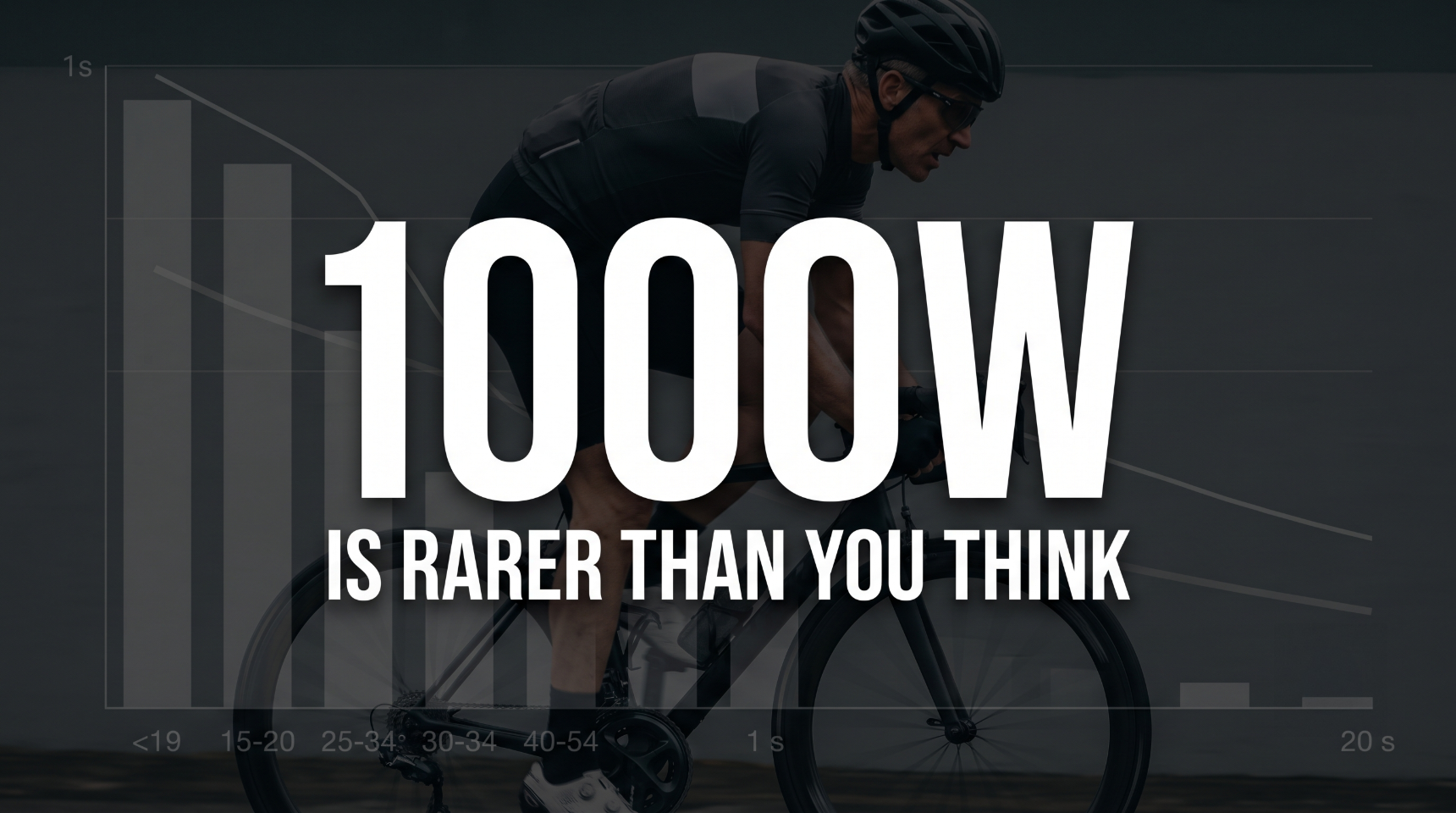
Everybody can hit 1000 watts!
Most men never hold 1,000 watts for a real sprint — and after 40, far fewer do. TrainerRoad's data kills the myth. Here's what Masters riders should train instead of chasing a vanity number.
You Eat Like a 30-Year-Old and Wonder Why You’re Not Rebuilding
You do the work. You lift twice a week, you hit your intervals, you put in the miles. And yet the legs come back flat, the recovery drags, and the power you built last season keeps slipping through your fingers. The easy explanation is the one everyone reaches for: that's just aging. It's usually not aging. It's under-eating the one macro that does the rebuilding. Rollfast's Formula One Nutrition framework
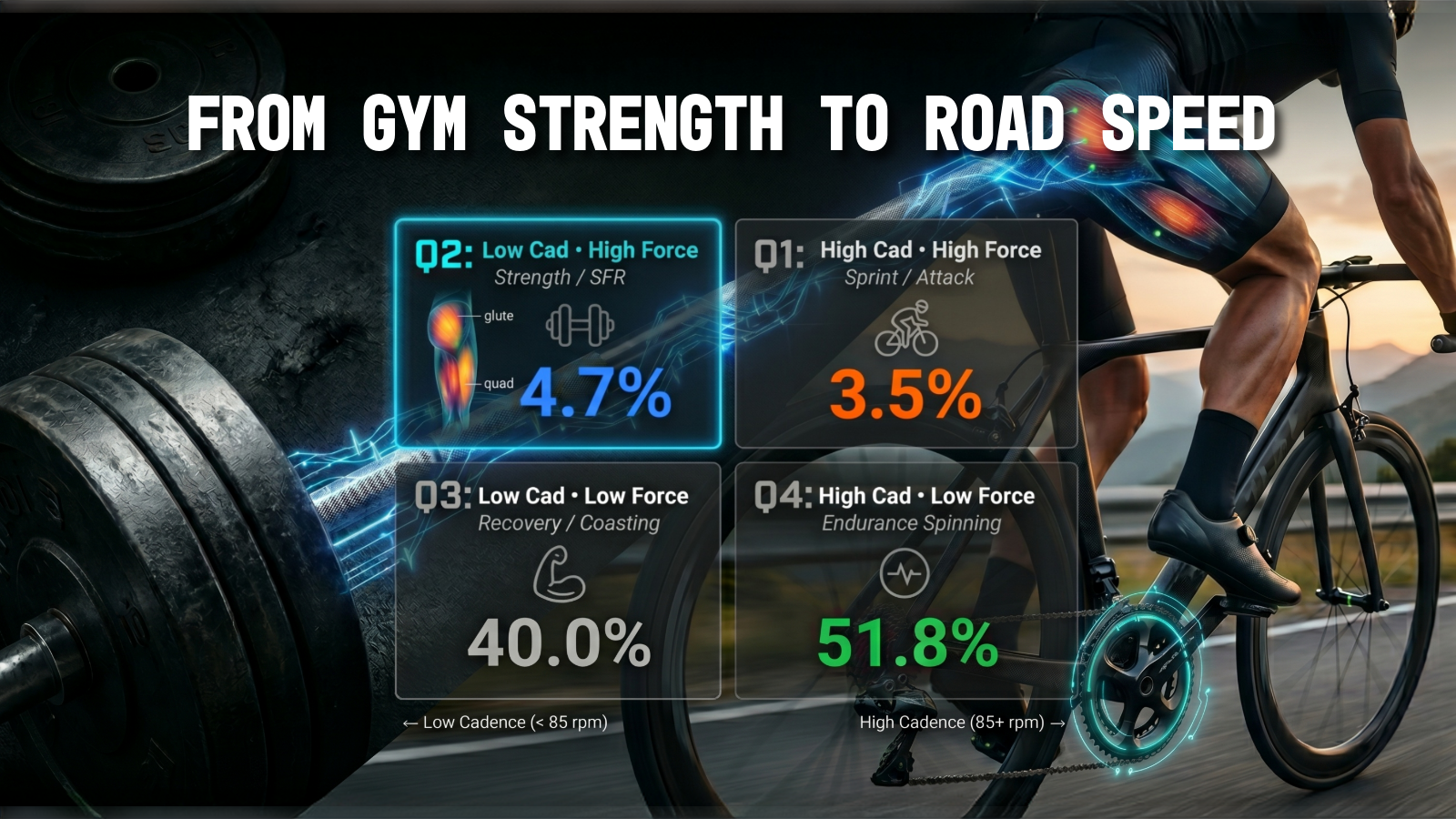
Why Your Gym Strength Never Reaches the Pedals (and How to Fix It)
You’re strong in the gym, hitting personal bests on your heavy lifts. So why do your legs lock up and your power fade when the road pitches up? The problem isn't your fitness—it's a fundamental failure in force transfer. Most cyclists are stuck training in one dimension, leaving their raw strength trapped in the weight room. This post introduces the critical 4 Power Quadrant Framework,