How to Stop Getting Dropped on Climbs After 40
Speed · Group rides
You hold the wheel just fine on the flat. You’ve done the long rides. You’ve put in the hours. Then the road tilts up and, almost exactly two minutes in, the gap opens and the group is gone.
If that sounds familiar, here’s the thing most riders get wrong: they assume the problem is fitness and spend the next month grinding out more miles. Sometimes that helps. Often it doesn’t, because the actual problem is tactics. Specifically, where you start the climb and what you do in the first ninety seconds.
Fix those two things first. Then add the right two sessions a week. Eight weeks from now, you’ll be the one cresting with the wheels instead of watching them disappear.
Why you’re getting dropped in the first two minutes, not the last two
Watch any group ride climb and you’ll see the same thing: the fast riders surge at the bottom, the bunch strings out, and a handful of people go into oxygen debt they never recover from. They’re not dropped because they’re weak. They’re dropped because they matched a pace that was never sustainable for them, right at the moment when sustainable mattered most.
The opening of a climb is when oxygen demand spikes fastest. Your muscles are still transitioning from flat-road rhythm, your breathing hasn’t caught up, and the lactic acid clock starts ticking the moment you go even slightly above your threshold. Go deep into the red in minute one and you’ll spend minutes two through four paying it back, right when the gradient usually bites hardest.
Most riders over 40 have a narrower band between “hard but manageable” and “blowing up” than they did at 25. That’s not a reason to despair. It’s a reason to be smarter about how you enter a climb.
The three-step plan for Saturday’s ride
Get to the front, and don’t be afraid to lead
Before the climb even begins, get to the front of the group. If you’re already at the very front, that’s fine too. Stay there and ride your pace.
Here’s what often happens: riders behind you will simply sit in and follow. That’s not a problem. It’s actually the best possible outcome, because when someone accelerates or attacks and goes around you, that’s perfect. They’re lighting the fuse you’re not. They’re the ones going into the red. You’re not.
What you want to avoid is starting at the back of the bunch. You have no margin there. Any small acceleration at the front sends a whip-crack effect through the group and you’re already off the back before you’ve had a chance to settle into your own rhythm.
On a typical club ride with twenty riders, aim to be in positions one through eight as you hit the base of the climb. That’s your real estate. Protect it.
Don’t match the first surge
Almost every group ride climb has an opening surge. Someone at the front gets excited, the pace spikes, and half the group goes with it. Don’t.
Let them go. Watch them roll away for about thirty seconds, and then settle into a pace that feels like a seven out of ten, not a nine. Hard enough that you know you’re working, not so hard that you’re gripping the bars and your vision is starting to narrow.
Here’s why this works: the surgers are usually riding well above their threshold in those first ninety seconds. They’re generating debt. You’re accumulating credit. By the halfway point of a three-to-five minute climb, the riders who went too hard are slowing down, their legs filling with fatigue, and their gap back to you is shrinking. You’re not catching them by going faster. You’re catching them by going steady while they slow down.
Think of it as the Slow Bleed used in reverse. In a race, you use controlled pressure to wear down opponents. On a club ride climb, you use controlled pace to survive while the surgers crack.
You’re not catching them by going faster. You’re catching them by going steady.
Find your ceiling and ride just under it
“Hard but sustainable” is not a feeling most riders can identify accurately, especially on a short, steep climb when the group is pulling away and the panic sets in. That’s why having a number matters.
Your ceiling on a climb this length is roughly your threshold power or heart rate, the pace you could hold for about an hour if you had to. For a three-to-five minute climb, you can go slightly above that, but not by much, and not in the first minute.
If you don’t know your threshold with any precision, that’s worth fixing (more on that below). But for Saturday, the rule of thumb is: if you’re breathing so hard you can’t get out three words at a time, you’re too deep. Back off five percent and hold that for the duration.
The two weekly sessions that make the climb feel different
Tactics will buy you a lot of ground this weekend. But tactics on top of real climbing fitness is what keeps you in the group for years. Here’s what the training actually looks like.
Session one
VO2-anchored short intervals
Three to five minute efforts, two to four reps, with roughly equal rest between them. The intensity should be based on your actual VO2max-anchored zone, which typically sits somewhere above threshold but well below sprint effort. If your zones were set from a 20-minute FTP test and you’ve never done a proper ramp test or maximal effort test, those zones are probably off, and that’s a problem worth solving.
VO2 intervals (VO2 refers to the maximum rate at which your body can use oxygen during hard effort) done at the right intensity teach your aerobic system to recover faster at the top of a hard effort. That’s exactly what you need on the climb: the ability to go hard for three minutes and not spend the next five in the red.
Two of these sessions per week, separated by at least two days, are enough to see real change in eight weeks.
Session two
Strength endurance climbing work
This is where SFR fits in. SFR stands for Salite Forza Resistenza, which translates roughly to strength endurance climbs. The execution is simple: find a moderate gradient (four to six percent works well), drop into a heavy gear, and climb at 50–60 rpm for three to five minutes. The goal is to drive torque through the pedals without spinning out, building the kind of leg strength that keeps you producing power when the gradient kicks up and your cadence drops.
Most riders over 40 lose the wheel on steep sections not because they run out of cardiovascular capacity but because their legs stop being able to push the gear. SFR work directly addresses that.
Do this once a week, ideally on a real hill if you have one. Two or three reps with full rest in between is plenty.
Your eight-week climbing block
Weeks 1–3
One VO2 session and one SFR session per week. Keep everything else easy. Let the quality work actually work by not burying it under junk miles.
Weeks 4–6
Add a fourth rep to your VO2 session if you’re recovering well. Increase SFR reps from two to three.
Weeks 7–8
Back off volume slightly, keep intensity. Let the adaptations consolidate. By this point, the three-to-five minute climb that was blowing you up should feel like a seven instead of a nine.
One more thing: know the climb
If you ride the same route every week, you have a significant advantage most riders don’t use. Walk the mental tape through the climb before you hit it. Know where it steepens. Know where it eases. Know the last hundred meters, and know exactly where it starts to flatten so you can time your Terrain Surfing acceleration.
That knowledge lets you pace by feel with more precision, because you’re not reacting to surprise gradients. You’re managing a known problem.
Tactics first, then fitness. That’s the sequence.
Start at the front, don’t chase the first surge, ride at a pace you can hold, surf the terrain over the top, and add two focused sessions a week. Eight weeks of that and the climb that used to end your ride will become the place where you finally start moving up instead of getting dropped.
Sources
GCN. 6 Top Tips to Avoid Getting Dropped on a Climb
TrainerRoad Forum. Training Hard and Still Sucking at Group Rides

Related Posts
Your VO2max Decline Is a Range, Not a Rate
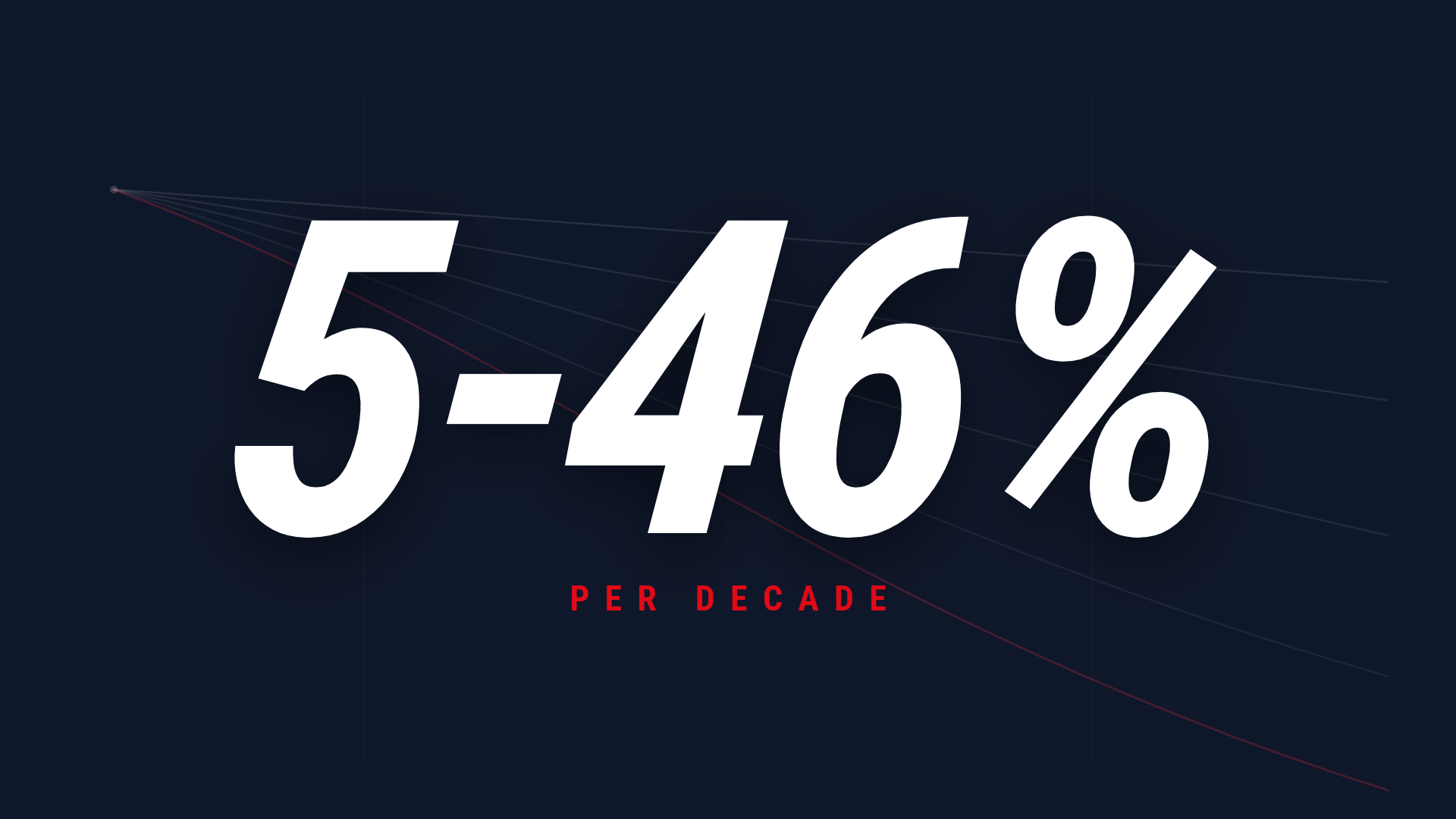
Masters riders lose anywhere from 5% to 46% of VO2max per decade. The spread has almost nothing to do with age and almost everything to do with training. That is why Rollfast anchors zones to a VO2 ceiling, not a 20-minute FTP test.

The Summer Scale Lie
I came home from a hot week in Florida heavier, and my Garmin insisted my body fat had jumped from 10 to 13 percent in five days. Then the heat took my watts too. None of it is what it looks like. Here is what the summer scale and your power meter are really measuring, why cutting calories is the worst move you can make,

The Tailwind Trap: Why Getting “Blown Home” is the Hardest Part of the Ride
There is a common myth in group cycling: Headwinds are for suffering, and tailwinds are a free ride home. When you turn your bike and feel the wind at your back, the expectation is that the group will casually float along at 30 mph while you barely touch the pedals. But if you’ve spent enough time in a fast group ride, you know the brutal