

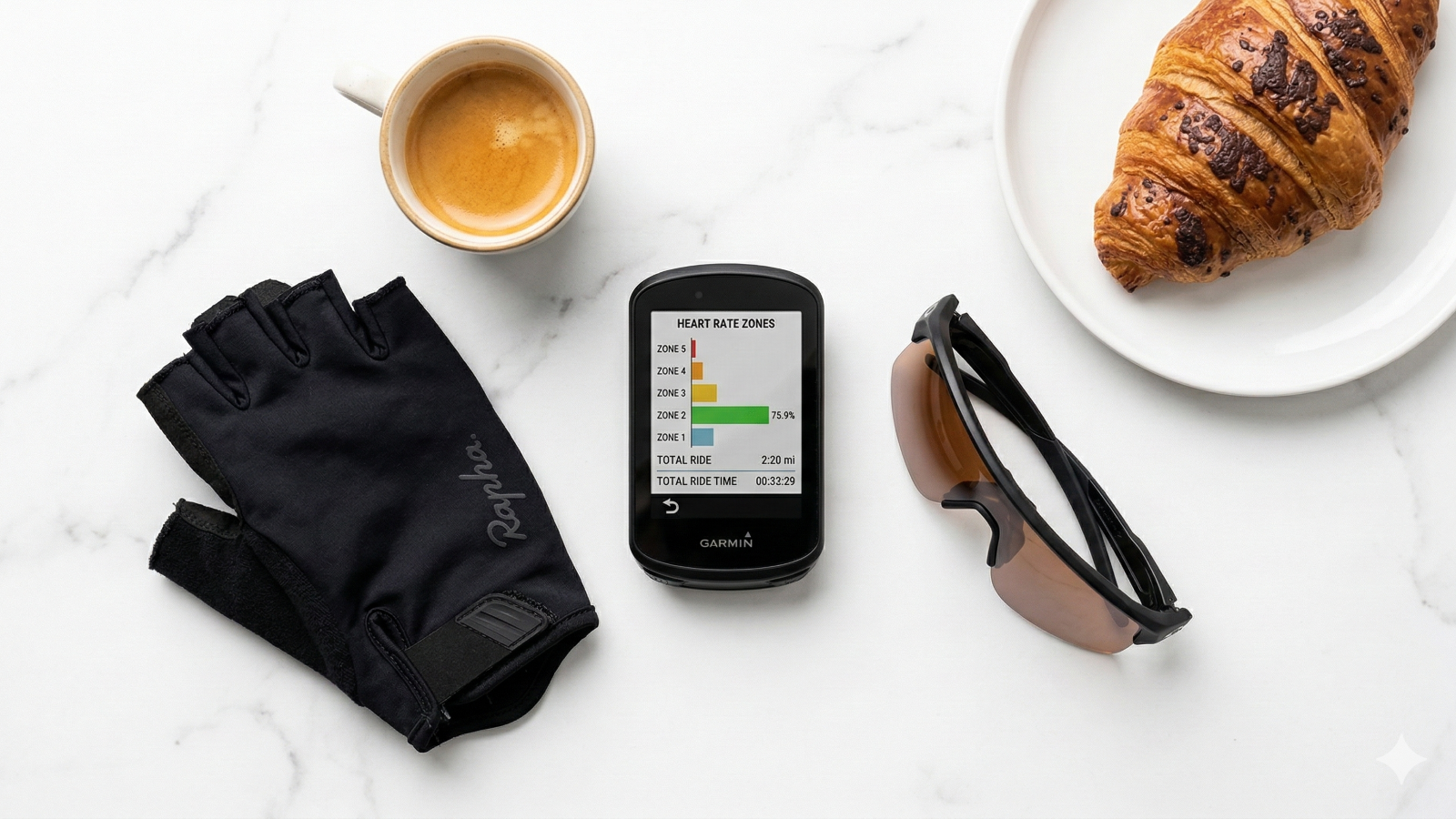
The Zone 2 Trap: Why Most Cyclists Are Training in No-Man’s Land
Thirteen years ago, I was doing everything wrong — and I didn’t even know it.
I was logging big miles. Showing up to group rides. Putting in the hours. But I wasn’t getting faster. I was either coasting along too easy or grinding along at that “feels like work but isn’t really hard” pace that so many cyclists live in. I had no structure, no real zones, and no idea that I was spinning my wheels in the worst place you can train.
That place has a name: Zone 3. And it’s where most cyclists spend most of their time.
THE ZONE 2 BUZZ — AND WHY EVERYONE’S GETTING IT WRONG
Zone 2 has become the hottest buzzword in endurance sports over the last couple of years. Podcasts, YouTube videos, training apps — everyone is talking about it. And for good reason. True Zone 2 training builds your aerobic base, teaches your body to burn fat efficiently, and sets the table for everything else in your training.
The problem? Most athletes think they’re doing Zone 2. They’re not.
Here’s what I see all the time with new athletes at Rollfast: they’re obsessed with their average speed. They’ll say something like “I need to be hitting 19mph or I’m not getting a good workout.” So they push just hard enough to keep that number up — and they end up in Zone 3. Every. Single. Ride.
And Zone 3 is a trap. It’s too hard to be truly restorative and build your aerobic engine the way Zone 2 does. But it’s not hard enough to produce the kind of physiological stress that drives real fitness gains. You’re doing all the work and getting none of the reward.
WHAT REAL ZONE 2 ACTUALLY FEELS LIKE
Here’s my Zone 2 test, and it doesn’t require a power meter or a heart rate monitor:
Can you hold a full conversation?
That’s it. If you’re breathing too hard to speak in complete sentences, you’ve already left Zone 2. Your body is demanding more oxygen, which means you’re working harder than you should be.
My favorite Zone 2 prescription? Grab a training partner, pick a coffee shop or a destination 20–30 miles away, and ride there together. Talk the whole way. Catch up. Solve the world’s problems. Stop for a coffee and fully decompress. Then ride home.
That’s not a junk mile day. That’s Zone 2 done right — and it’s also great for your mental fitness.
The hardest part for most athletes is accepting that it feels too easy. If you’ve spent years chasing speed, slowing down feels like going backwards. Trust me — it’s not.
THE OTHER END: WHEN YOU GO, YOU GO
Polarized training isn’t just about going easy on easy days. It’s about going genuinely hard on hard days.
I was out training with former pro cyclist Christian Vande Velde near his old place outside Chicago when he said something that’s stuck with me ever since. We were just spinning along and he looked over and said: “I always got the fittest when I went really, really hard when I felt good — and really, really easy when I felt bad.”
That’s polarized training in one sentence. No Zone 3. No “moderate effort” days. You’re either building your aerobic engine or you’re creating a training stimulus worth responding to.
I always got the fittest when I went really, really hard when I felt good — and really, really easy when I felt bad.
At Rollfast, we train all the zones — but with purpose and timing. Here’s how I think about it:
Zone 2 is your foundation. It’s where you build your engine over weeks and months of consistent, honest effort.
Threshold training is about durability — teaching your body to hold high power output just below the point where lactate starts piling up faster than you can clear it. This is where you build your staying power in races and hard rides.
VO2max work is where we sharpen the knife. Short, brutal intervals that push your aerobic ceiling higher and make everything else feel easier. This is the good stuff.
But here’s the catch — and this is important: if you over-sharpen a knife, it gets weak. The same is true with VO2 work. Too much of it, too soon, and instead of getting faster, you plateau. Keep pushing and your body starts to crack — you get sick, you get injured, your motivation tanks. More is not better. Better is better.
THE MENTAL SIDE: TREAT HARD INTERVALS LIKE A PR
When it’s time to go hard, you have to go really hard. I tell athletes to think about it like a PR attempt in the weight room. When you step up to that bar for a max effort, you don’t half-commit. You lock in. You focus. You get it done.
A 3-minute, 5-minute, or 10-minute interval is the same thing on the bike. You have to mentally flip the switch, commit to the effort, and finish what you started. That’s where fitness is made.
The discipline to go truly easy when it’s an easy day — and truly hard when it’s a hard day — is what separates athletes who improve from athletes who just accumulate miles.
THE FIX IS SIMPLER THAN YOU THINK
Here’s the good news: if you’re stuck in Zone 3 purgatory, this is one of the most correctable problems in all of endurance sports. You don’t need new gear. You don’t need to train more hours.
You need structure. And you need the discipline to actually follow it.
Slow down on your easy days. Way more than feels comfortable. Save your energy for the sessions where you’re meant to suffer — and then actually suffer.
That shift alone will do more for your fitness than another year of grinding at 19mph ever could.
If you’re tired of spinning your wheels and want a training plan built around how your body actually works — a Rollfast coach will dial in your zones, structure your weeks, and hold you accountable to the process. No guessing. No gray zone. Just real training that gets real results.
👉 Sign up at: https://coaching.rollfast.us/coaching-plans/

Marlin Meyer
“If you want to get fast, you have to ride slow”. George Rian
Coach Tanner
FACTS… but you also have to ride fast. Miss seeing you Fish. Hope you are well!
Dan Fox
Structured training guided by Rollfast Coaching provides me the proper approach to improving my cycling fitness along with mental fitness and therefore my overall enjoyment in the sport. Sure wish I had met Matt Tanner years ago; I would have been that much farther along in my cycling lifelong journey.
Coach Tanner
Thanks for the kind words Dan. I love working with you and very much appreciate your friendship!