Ozempic and the Cyclist: You’re Asking the Wrong Question
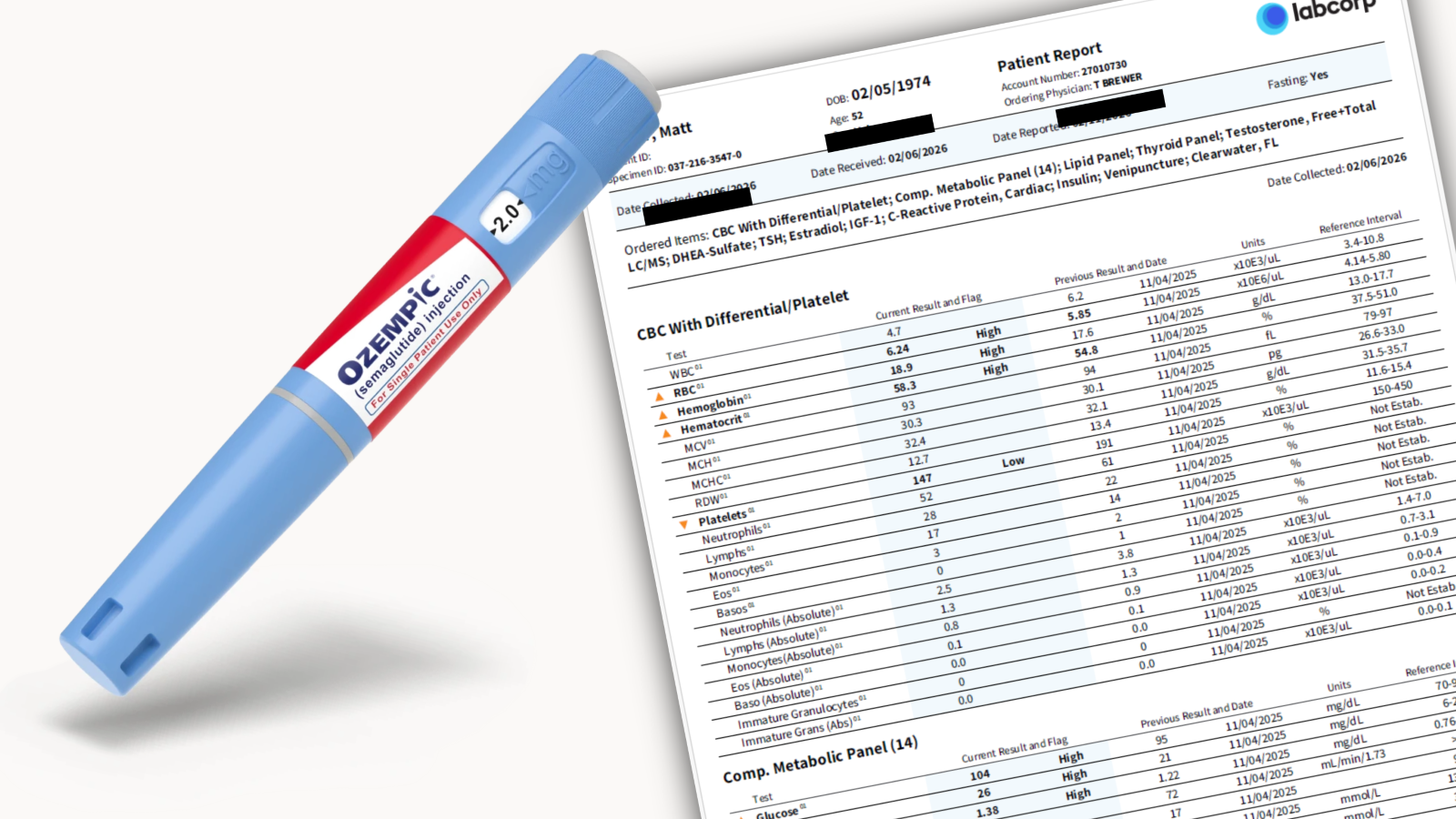
In 2022, I tried Ozempic.
I wasn’t diabetic. I wasn’t obese. I was a cycling coach trying to squeeze out a few extra watts per kilogram by dropping some weight. I’d heard the buzz, talked to my doctor, and figured — why not?
It killed my appetite almost immediately. Which sounds like exactly what you want, right? Less eating, fewer calories, lighter on the bike.
Except there was one problem: I was completely reliant on carbohydrates to fuel my training. And when you can’t eat, you can’t fuel. For an entire week, I failed every single workout I attempted. I was empty. Flat. Done. I stopped taking it and swore I’d never go near one of those drugs again.
UNTIL THIS…
Fast forward to about a month ago. My wife Chris — who runs MC Nutrition and knows more about metabolic health than just about anyone I know — suggested I try a micro dose (1/10 the starting dose) of Retatrutide. Not to lose weight. Not to chase a number on the scale. She had read a study linking snoring to inflammation in the esophagus, and she thought it might help.
For the record: my snoring had become a serious problem. For both of us.
So I tried it.
Within a week, I stopped snoring. My sleep score improved dramatically. And then — almost as a side effect I hadn’t asked for — my weight dropped from 174 to 166 pounds. My body fat went from 14% down to 10%.
I hadn’t changed my training. I hadn’t changed my diet. I had just reduced inflammation.
THE PART NOBODY’S TALKING ABOUT
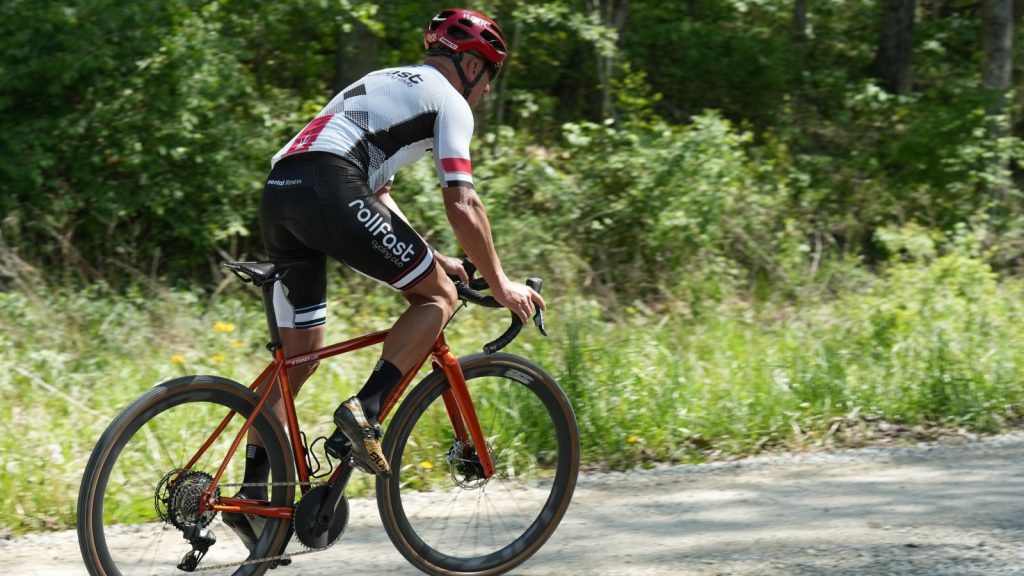
Two weeks later, I was on a group ride in Florida. Mile 70. Flat roads, hot sun, tired legs — or at least they should have been tired legs. Instead, I found myself taking 15-minute pulls at 350 watts.
On 4 dates. That’s all I ate on the entire ride.
Let me say that again: 70+ miles, 350 watts at the front of the group in the final hour, fueled by four dates.
That wasn’t the weight loss talking. We’re in Florida — it’s flat. Eight pounds doesn’t move the needle on flat roads. What moved the needle was the reduced inflammation. My body was processing energy differently. My recovery between efforts was faster. My perceived effort at high power was lower.
I had accidentally discovered something important.
THE SCALE IS LYING TO YOU
Here’s what I see constantly at Rollfast: cyclists who want to get faster, and who have decided that losing weight is the path to get there. They start cutting calories. They skip the carbs that fuel their hard intervals. They train harder and eat less — and they get slower, more tired, and more frustrated.
Our athlete Matt Breeden wrote about this in his piece “Getting Heavier Made Me Faster” — and it’s exactly right. When we focused on building his muscle through structured strength work, he actually gained weight. But his body fat dropped, his power went up, and his performance improved. The scale said one thing. His body said another.
The scale is a terrible coach.
WHAT YOU SHOULD ACTUALLY BE ASKING
If you’re a cyclist scrolling Instagram and wondering whether Ozempic or a GLP-1 drug might help you get faster — I’m not going to tell you to stay away from them. My experience this past month has been genuinely remarkable.
But I want you to ask a different question.
Instead of “how do I lose weight?” ask: “What is actually holding my body back from performing?”
For someone who is significantly overweight, losing weight might genuinely be part of the answer. But for most of the cyclists I work with — people who are reasonably fit, training consistently, doing everything “right” — the answer is somewhere else entirely. It might be:
– Vitamin D levels — chronically low in endurance athletes, and it tanks your energy production and recovery
– Thyroid function — even subclinical thyroid issues can make you feel like you’re riding through mud
– Inflammation — driven by stress, poor sleep, diet, or all three
– Hormonal shifts — especially relevant for masters athletes in their 40s and 50s
These aren’t things you can see on a scale. They show up in bloodwork. They show up in how you feel at mile 70. And they’re all things we look at in the Rollfast Longevity Audit — a comprehensive performance blood panel that tells you what your body actually needs, not just what the mirror tells you.
A GLP-1 drug might be part of your answer. But there’s a very good chance there are other things that should be addressed first — things that will move the performance needle further, faster, and without the side effects I experienced the first time I tried one of these drugs without the right context.
THE REAL QUESTION
I’m not anti-Ozempic. I’m anti-chasing-the-wrong-thing.
My 2022 experience failed because I was using a powerful tool for the wrong job. My experience this past month has been transformative — because the goal was health and inflammation, not a number on a scale. The body composition change was a consequence, not the target. And the performance gains followed.
That’s the difference. And it’s everything.
Stop optimizing your weight. Start optimizing your body.
—
Curious what’s actually holding your performance back? The Rollfast Longevity Audit looks at the markers that matter — the ones your annual physical misses.

Related Posts
The Athlete’s Paradox: Fit Muscle, Sick Blood Work
Your legs can be insulin sensitive while your fasting insulin tells a different story, and only one of those shows up on a lab report. Masters riders who train hard and eat poorly off the bike are the ones most likely to get blindsided by metabolic dysfunction at 60.

Your Blood Work Looks Fine. So Why Are You Getting Slower?
A note for competing athletes: DHEA and testosterone therapy, discussed below, are prohibited in sanctioned competition under WADA rules, both in and out of competition. The protocols described in this article are appropriate only for athletes who do not race under a sanctioning body. If you compete under USADA, UCI, or similar rules, your Longevity Audit recommendations are screened against the current WADA Prohibited List.Most

How a Rollfast Blog Post Solved a Heart Mystery
After battling burnout and mysterious heart palpitations, Tom Tokarcik sought answers. He found them not just through a Rollfast Longevity Audit, but directly from a Rollfast blog post that exposed the hidden culprit: oxalates. This is Tom's powerful story of resolving chronic pain, stabilizing his heart rhythm, and discovering why 'normal' isn't enough when you're pursuing optimal health and performance as a Masters athlete.