Why Your Recovery App Is Making You WORSE (And How to Actually Recover)
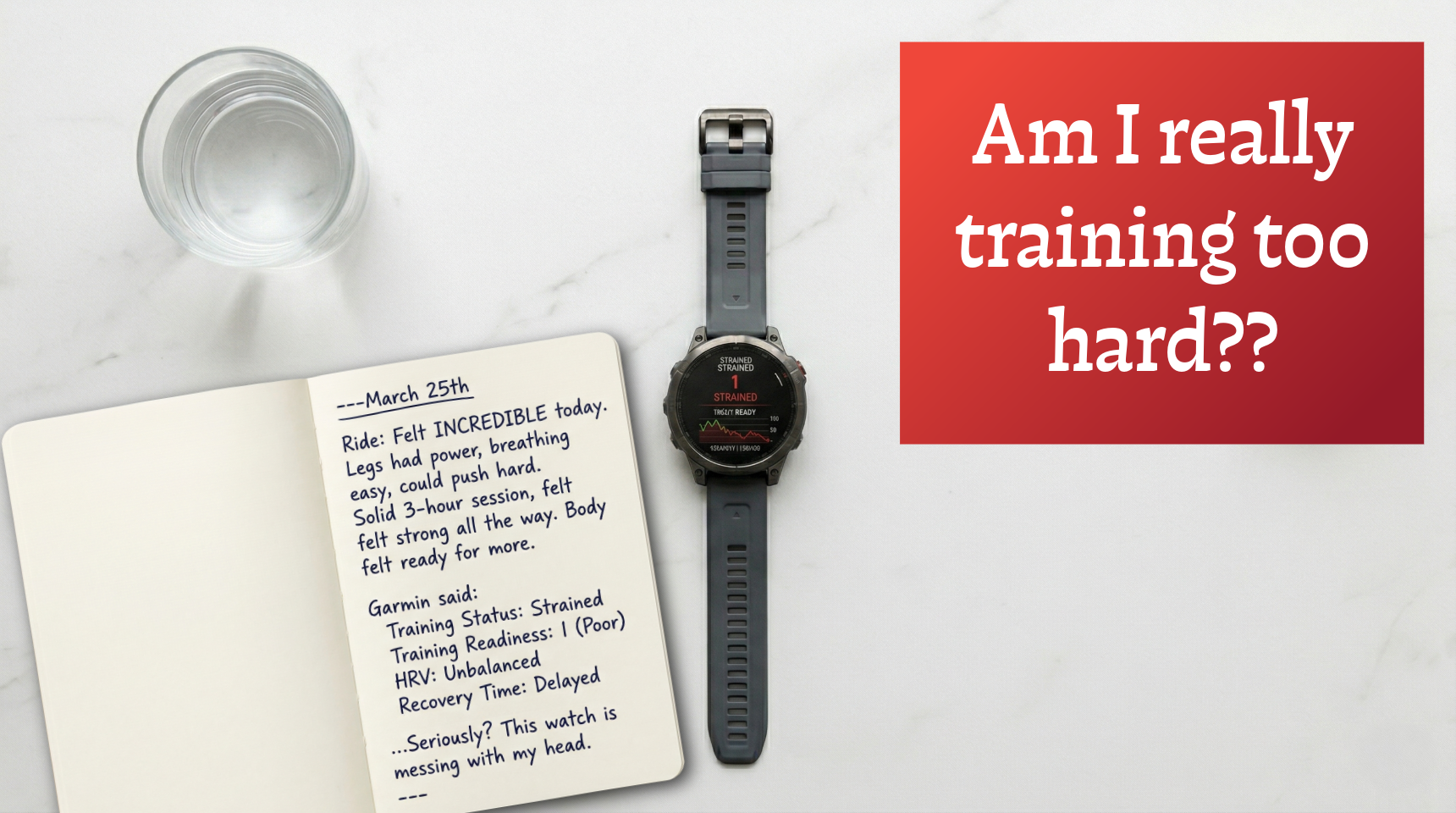
For the last 5 months, my Garmin watch has been telling me I’m broken.
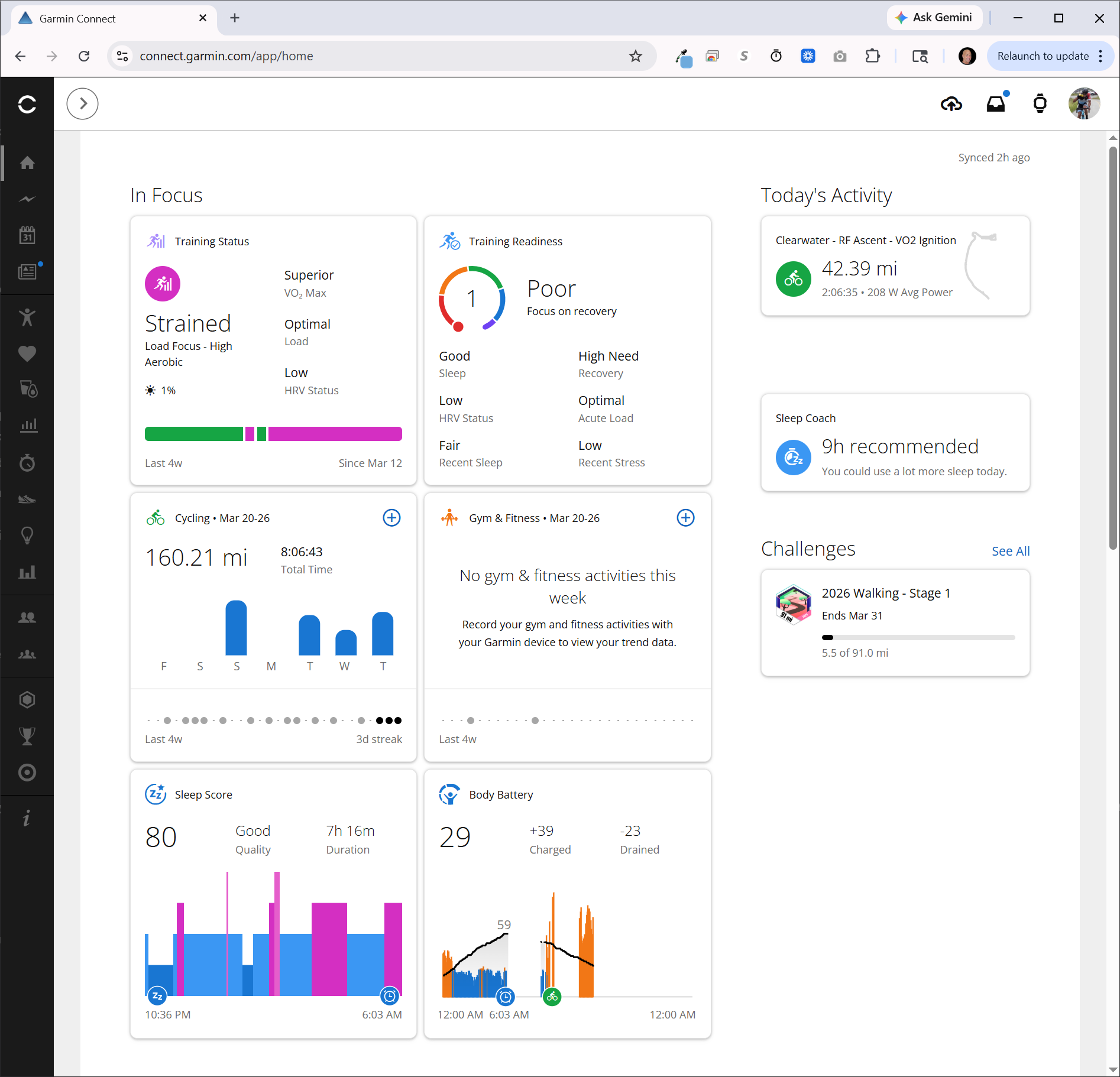
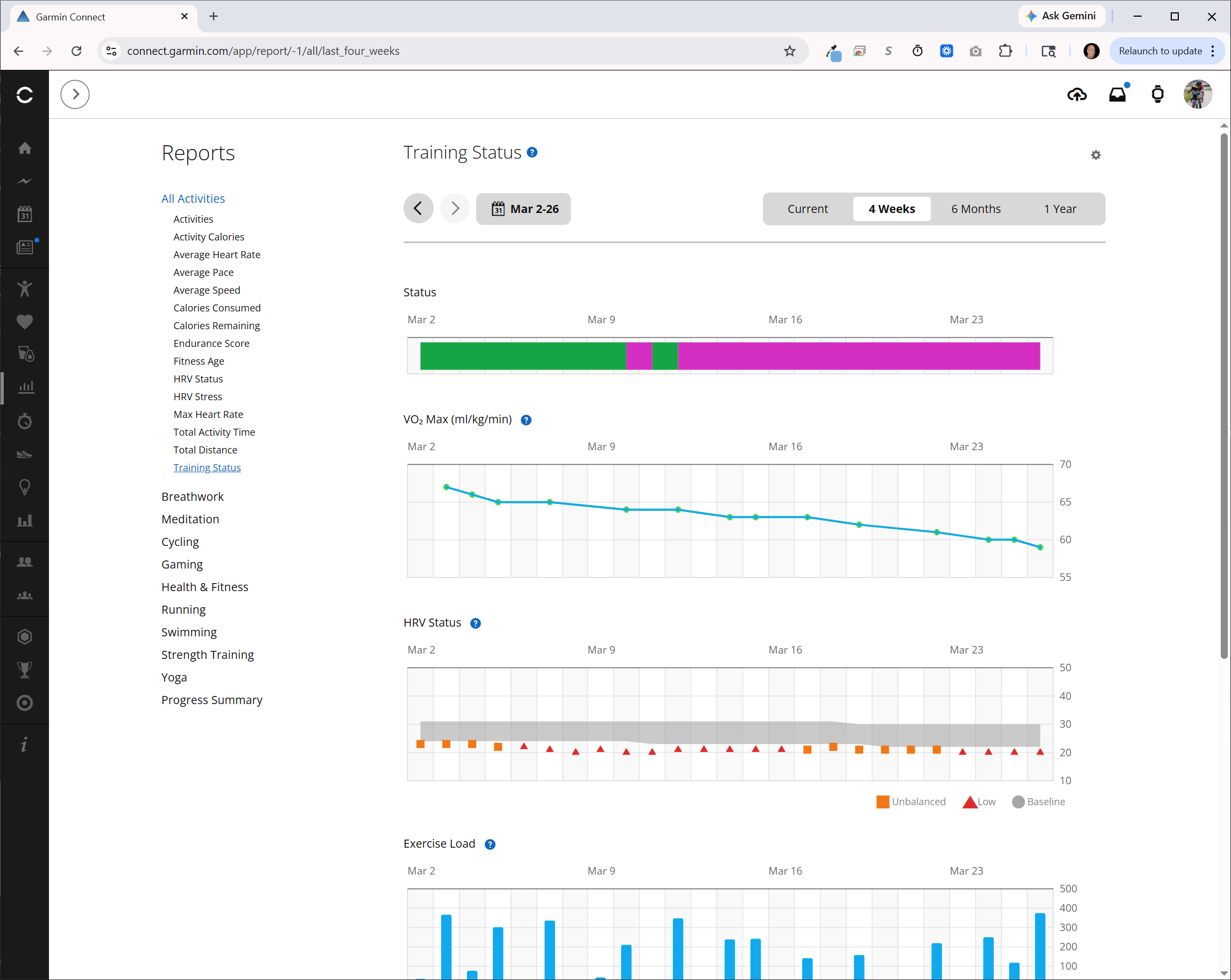
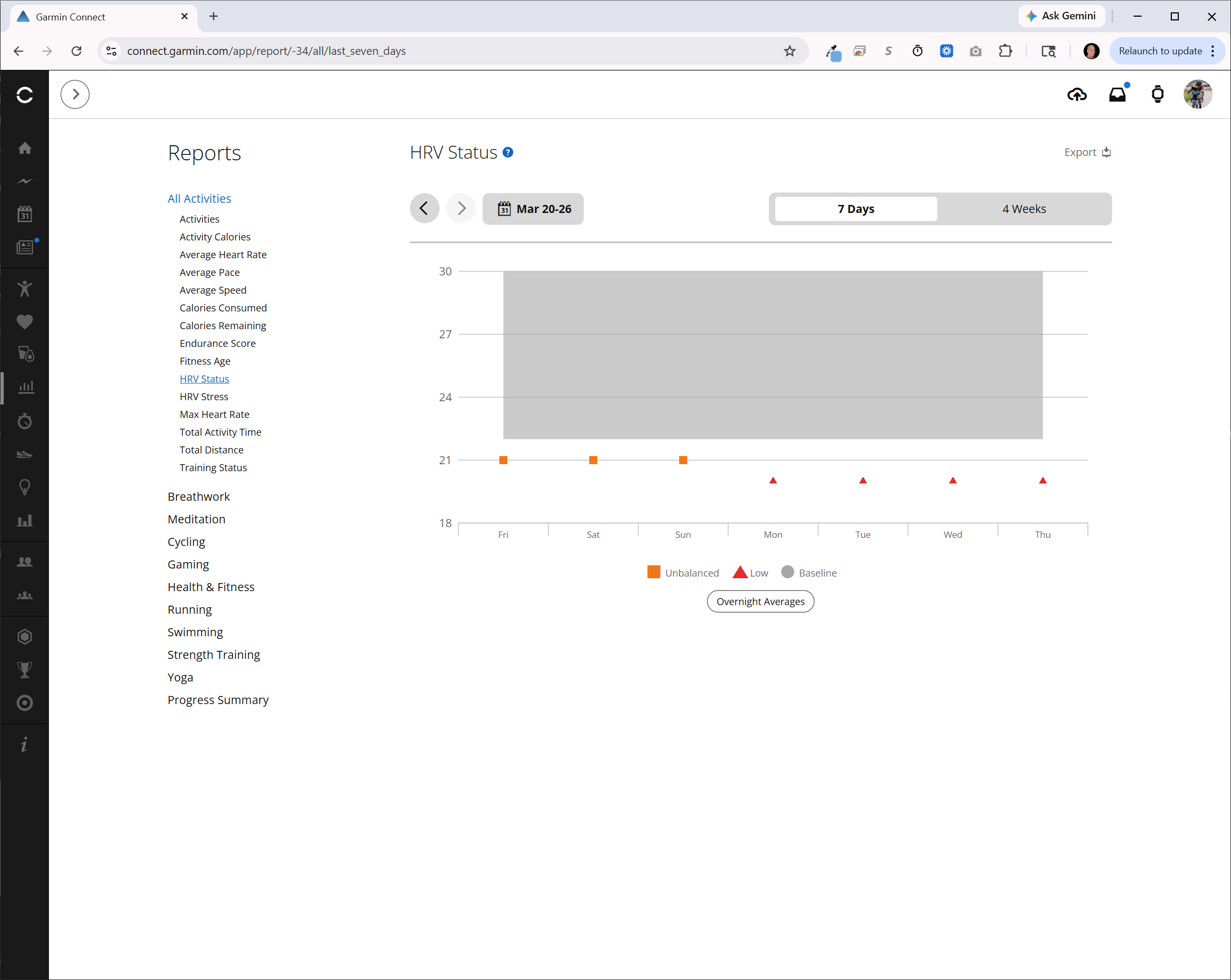
My Training Status? Consistently “Strained.” My Training Readiness? Frequently “Poor,” often with a big red “1” and the helpful advice to “Focus on recovery.” My HRV Status? Mostly “Unbalanced” or “Low.” My VO2 Max? It was 70 in February, and now it’s taken a dive to around 59-60.
According to my watch, I’m overtrained, under-recovered, and probably shouldn’t even be looking at my bike.
Here’s the problem: Two Saturdays ago, I found myself on an 80-mile loop around the bay with some of the fastest hitters in Clearwater, Florida. Everyone was pushing hard. By mile 70, most riders were visibly cooked. But I was taking 10-minute pulls at 350 watts, feeling incredibly strong. If I followed my watch, I never would have done that ride.
If I followed my watch, I never would have done that ride. This isn’t just a disconnect; it’s a full-blown contradiction that highlights a serious problem for Masters athletes: your recovery app might be actively sabotaging your performance and your mental game.
The Screenshots That Tell Two Stories
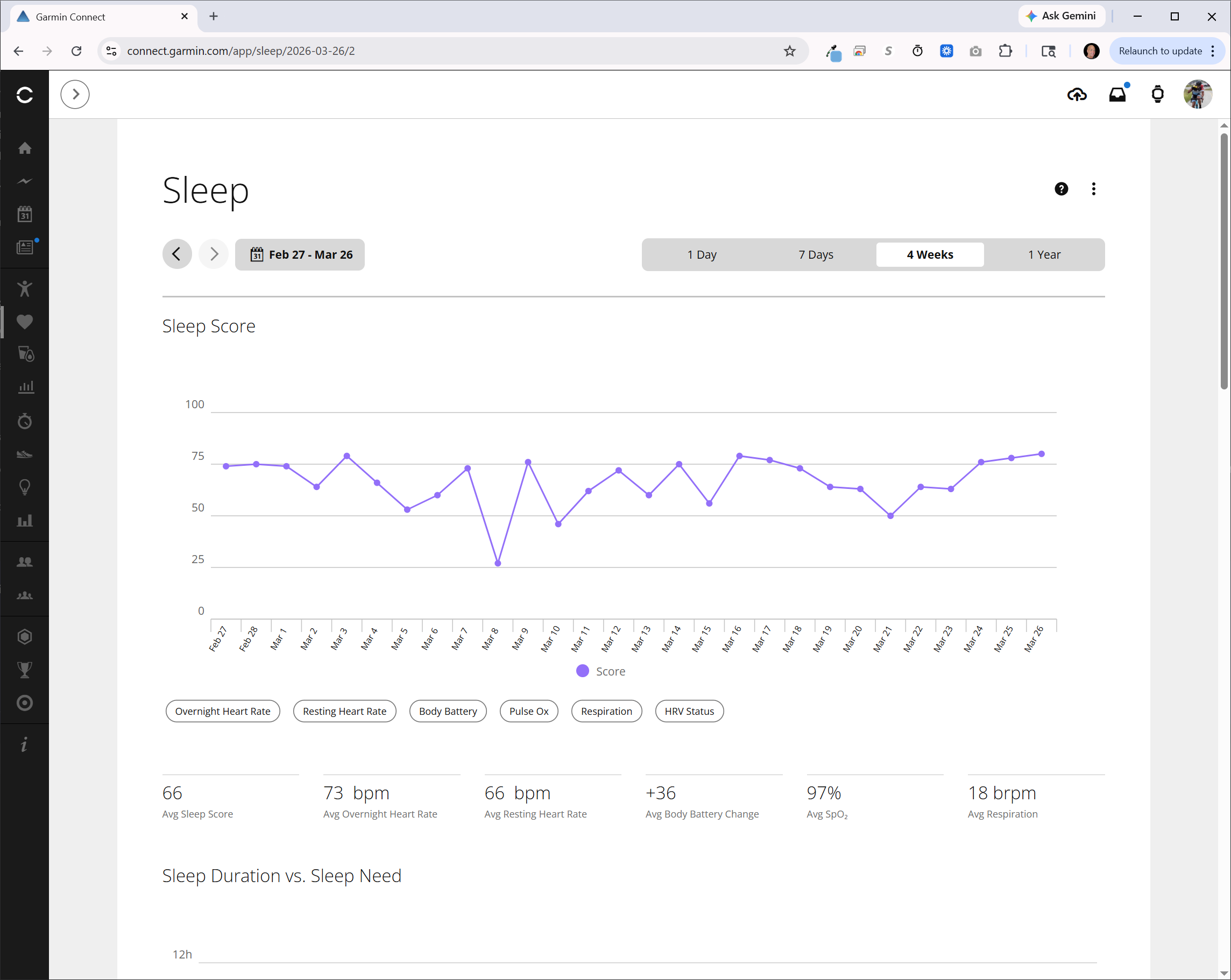
I’ve included a few screenshots from my Garmin dashboard below. Take a look: the red warnings, the low numbers. This is what I’ve been seeing for months.
 |
 |
 |
 |
The Internal Dialogue: Data vs. Intuition
When my watch flashes “Strained” or “Poor Readiness,” my immediate internal dialogue is to question whether I’ll be able to complete the planned workout, or if maybe I should just take another rest day. Even when I feel good, that little red notification plants a seed of doubt. If a workout goes badly, the first thought is always, “Was the data right? Should I have listened?”
And sometimes, during a ride, my watch will suddenly buzz with an alert: “Recovery time delayed.” It actually pisses me off. I’m in the middle of enjoying a ride, feeling strong, and this algorithm is telling me I’m doing something wrong. It’s distracting, frustrating, and completely undermines my confidence.
Why Your App Gets It So Wrong
My case is probably unique because I’m very dialed in on so many other variables. My nutrition, peptides, hormones, and overall health are meticulously managed (as you can see from my latest Longevity Audit). I also had a severe E. coli infection in October 2025, right around the time I got the watch. This likely created a “funky calibration” where the watch set a baseline during a period of intense physiological stress and hasn’t been able to accurately recalibrate since.
The core issue is that these apps rely on generic algorithms. They look at population averages and universal stress responses. They don’t (and can’t) account for:
* Individual Physiology: Your unique metabolic flexibility, hormonal profile, or genetic predispositions.
* Life Events: A major illness like E. coli, significant life stress, or even minor changes in routine can throw their algorithms completely off.
* Dietary Context: Crucially, they don’t understand your fueling strategy. For a protein-based, low-carb athlete (almost carnivore, in my case), generic algorithms built on high-carb metabolisms will always misinterpret recovery and energy availability.
Essentially, these apps are like a doctor giving you advice based on what a “normal” person needs, when you’re an optimized, high-performing athlete with a unique health history. Their “normal” isn’t your optimal.
The Rollfast Solution: Trust Your Internal Compass (With Smarter Data)
At Rollfast Coaching, we believe technology should be a tool, not a crutch. Your wearable can provide useful reference points, but it should never replace your own intuition or a comprehensive understanding of your body.
Here’s our approach for Masters athletes:
1. Listen to Your Body First: This is paramount. How do you feel? What’s your energy like? Are you hungry? Are you sleeping well? Your subjective experience is the most important data point.
2. Use Wearables as a Reference, Not a Dictator: Look at the data when you feel truly good, and when you feel truly bad. See if you can spot patterns that align with your experience, rather than blindly following daily scores. Over time, this helps you build body literacy.
3. Prioritize Objective Internal Data: This is where the Rollfast Longevity Audit comes in. Bloodwork (CRP, hormones, metabolic markers) gives you an actual picture of your internal state, far more nuanced than an HRV score. It tells you if there’s systemic inflammation or metabolic dysfunction truly limiting your recovery.
4. Embrace Deloads, Don’t Be Forced Into Them: Recovery isn’t just about passive rest. Our periodized training plans incorporate strategic Recharge weeks and System Reboot workouts that actively promote recovery and adaptation, without an app telling you you’re “strained.”
My Next Move: Unplugging to Recalibrate
Honestly, my watch has been messing with my head too much. The constant negative feedback, even when I’m feeling strong and performing well, is counterproductive.
For the next few weeks, I’m taking the watch off. Not just to disconnect from the algorithmic noise and let my body’s natural rhythms reset, but also to finally work on those tan lines! (A little humor for those who know me as “Tan Dog.”) When I come back to it, it will need to recalibrate with my actual normal, my optimal normal, not the skewed baseline it captured during a period of illness.
It will be a good experiment to see if the Garmin watch starts giving more accurate reports after a break from wearing it.
Your intuition, combined with targeted, objective data (like a Longevity Audit), is far more powerful than any algorithm. Don’t let a piece of tech tell you how to feel or undermine your confidence. Listen to your body. It knows best.
Have you experienced frustration with your wearable? Did you take a break from it? Did you modify your training and recovery based on your own intuition, even when the data told you otherwise? Leave a comment below and tell us your story.
Matt Tanner is the founder and head coach at Rollfast Coaching. He helps Masters athletes optimize their performance and longevity by focusing on the fundamentals and leveraging personalized data. Explore the Rollfast Longevity Audit at coaching.rollfast.us

Related Posts
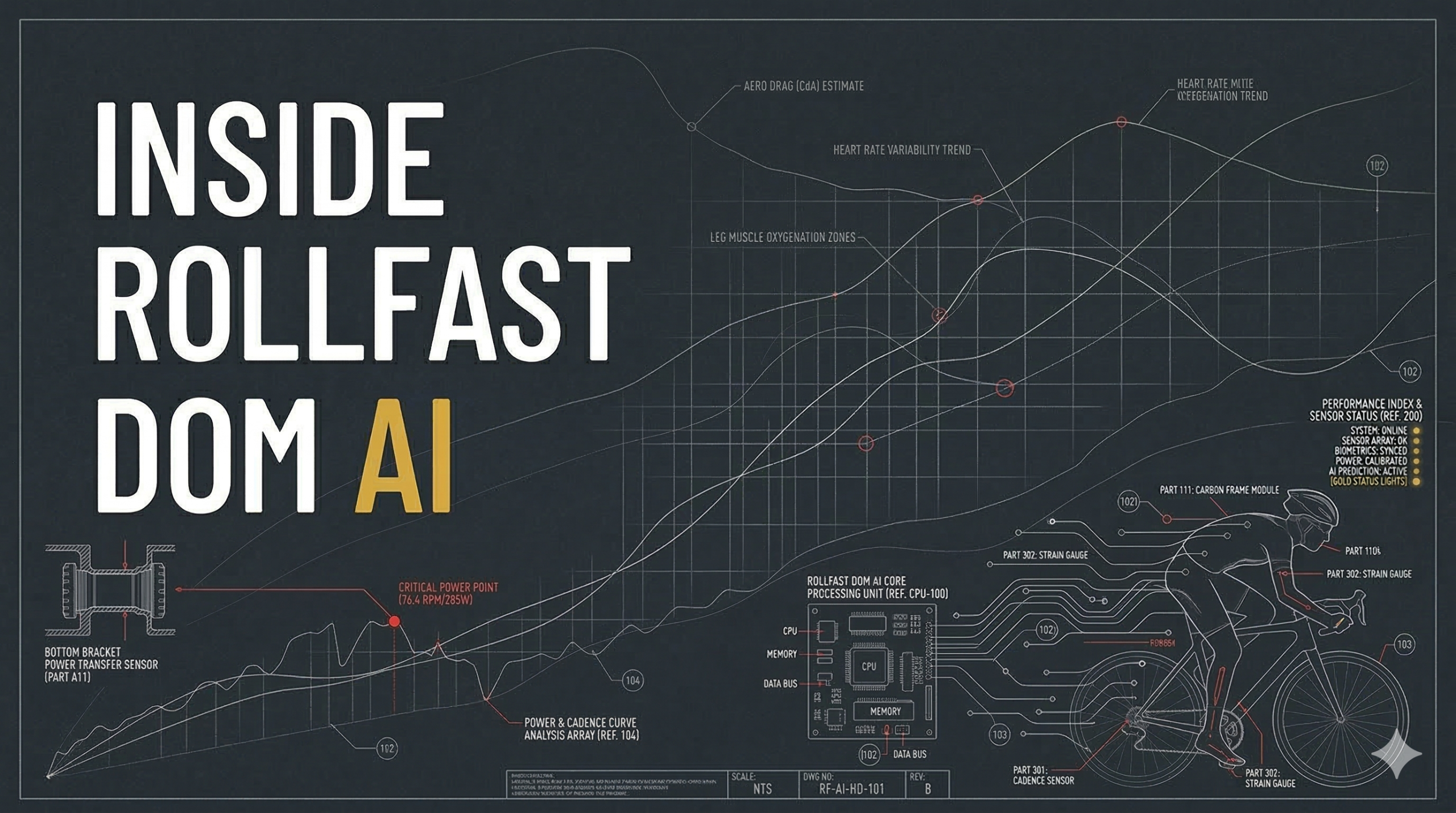
Why Your Data Deserves Better: Inside Rollfast DOM AI
Most cyclists are swimming in data. Garmin, Wahoo, Zwift, Strava, TrainingPeaks… the numbers are endless. But here’s the blunt truth: raw data, without context or expert interpretation, is just noise. It can lead to confusion, frustration, and even actively detrimental training decisions. At Rollfast Coaching, we believe your commitment to performance and longevity deserves more than generic analytics or the latest pro-level fads. It deserves a

Balance Is Measured In Years
The idea that work, life, and training should sit in perfect equilibrium every day is a comforting myth—and mostly false. If you are ambitious in more than one area of life, trying to hold everything at peak output simultaneously isn’t discipline; it’s a misunderstanding of how growth works. Here is why we need to stop measuring balance in days and start measuring it in years.

Why I almost gave up on cycling.
When your identity is tied to your performance and the numbers start to fail, the descent is soul-crushing. After months of fighting infection, "wrecked" performance, and a body that wouldn't cooperate, I hit the breaking point. This is a raw look at my recent struggle, why I almost gave up on the sport, and the specific circle of support that helped me rebuild the engine