Blood Flow Restriction Training: Breakthrough or Bullsh*t for Masters Cyclists?
By Matt Tanner & Joel Novak, PT
Today, we’re diving into a topic that sounds either futuristic or downright dangerous: Blood Flow Restriction (BFR) training. You’ve probably seen the bands or cuffs, and maybe, like me, your first thought was, “Why would anyone do that?”
But BFR has been gaining serious traction in rehab and performance circles for nearly a decade. To cut through the hype and understand if it’s a breakthrough or bullsh*t for Masters cyclists, I sat down with my friend Joel Novak. Joel is a physical therapist, a certified strength and conditioning specialist, and has been working with BFR since 2017 with athletes from high school to professional, as well as post-surgical patients.
At Rollfast Coaching, we’re always looking for new ways to optimize speed, strength, and longevity, especially for Masters athletes. So, we asked Joel the hard questions.
What Exactly IS Blood Flow Restriction Training? (And Why It’s Not as Scary as It Sounds)
Joel’s explanation cuts straight to the core: “The concept is you place a cuff or a band around your upper arm or upper thigh to limit the amount of blood flow into or out of that limb… you’re never stopping blood flow, so you’re just limiting it.”
The key is “limiting,” not stopping. This controlled restriction creates an “oxygen deficit” in the working muscles. Your body has to work harder to deliver oxygen, leading to more rapid fatigue than traditional exercise. Essentially, BFR taps into your body’s natural physiological systems. As Joel puts it, “BFR works because exercise works, and exercise works because the human body works. It can be trained. It can adapt.”
Harder Training with Less Loading: A Masters Athlete’s Dream?
For Masters athletes, the idea of “harder training with less loading” is a game-changer. As we age, joint health becomes a primary concern. Joel elaborates: “Less oxygen available to the working muscles decreases the amount of force/load/volume needed to elicit fatigue and obtain a ‘training effect.'”
This means you can achieve significant muscle recruitment and stimulate growth (hypertrophy) with lighter weights or lower resistance. This has two key effects:
* Local Effect: Reducing oxygen and increasing metabolites in the tissue stimulates protein synthesis and makes cells more responsive to improve homeostasis. Your muscles get a massive training stimulus.
* Systemic Effect: Your central nervous system registers this “crisis,” triggering repair hormones (growth hormone, IGF-1, VEGF) and increasing heart rate and ventilation. Your body adapts at a systemic level.
The result? You build muscle and strength without the typical wear and tear on joints, making it invaluable for injury prevention, rehabilitation, and sustained performance.
Cycling-Specific Protocols: How to Integrate BFR
Joel confirms BFR is definitely an adjunct for a Masters cycling regimen, applicable to sprint training, VO2 max aerobic training, thigh size/strength, and time to exhaustion. However, the existing cycling literature is stronger for low-to-moderate intensity work to augment adaptations, not replace true high-intensity power sessions.
Example Protocols from Joel:
1. For Oxidative Capacity + Fatigue Resistance (e.g., modifying a Zone 2/Tempo ride):
* Frequency: 1-2 sessions/week (max 2-3 sessions/week).
* BFR Setup: Cuff at proximal thigh. Pressure: Moderate (50-60% AOP, not overly restrictive). Continuous inflation during intervals, deflate between sets.
* Main Set: 4-6 intervals of 5 minutes @ 75-85% FTP (upper tempo/low threshold), Cadence: 85-95 rpm. Rest: 3 minutes easy spin (BFR OFF).
* Optional Finisher: After last interval, 1 x 8-10 min @ 65-70% FTP (BFR still applied).
2. For Sprint Ability & Peripheral Fatigue Resistance (as a “Metabolic Layer”):
* Perform your normal sprints first (NO BFR) for true neuromuscular stimulus.
* BFR “Metabolic Layer” (Immediately after main sprints):
* BFR Setup: Cuff at proximal thigh. Pressure: Moderate (50-60% AOP). Continuous inflation during intervals.
* 3-4 sets of: 30 sec @ ~120% FTP, 30 sec easy spin (BFR remains ON).
* Between sets: 3 min recovery (BFR OFF).
* Optional Finisher: 2-3 min continuous @ ~70% FTP with BFR.
Joel emphasizes BFR is “usually something integrated or added on. Love it as a finisher, personally.” He also cautions against continuous restriction for more than 20 minutes for new users, though highly trained individuals may exceed this.
The Recovery Equation: Local Burn, Systemic Freshness?
“You’re probably going to get tired faster than you’re used to,” Joel explains about the immediate fatigue. Your legs will feel “so exhausted” locally because of the direct blood flow restriction.
However, systemically, your heart and lungs are working harder to compensate, trying to deliver more oxygen. “So your heart and lungs might feel pretty dynamite,” Joel adds. The paradox is that while your working muscles are screaming, your overall systemic fatigue might be lower, potentially leading to quicker overall recovery compared to heavy-load training.
Dispelling the Myths: Safety, Equipment & Contraindications
“If you’ve not been told it’s unsafe for you to exercise, there’s no reason you can’t do BFR,” Joel asserts. BFR is exertional, not easy, but it’s generally very safe when applied correctly with the right equipment.
Absolute Non-Negotiables for Safety:
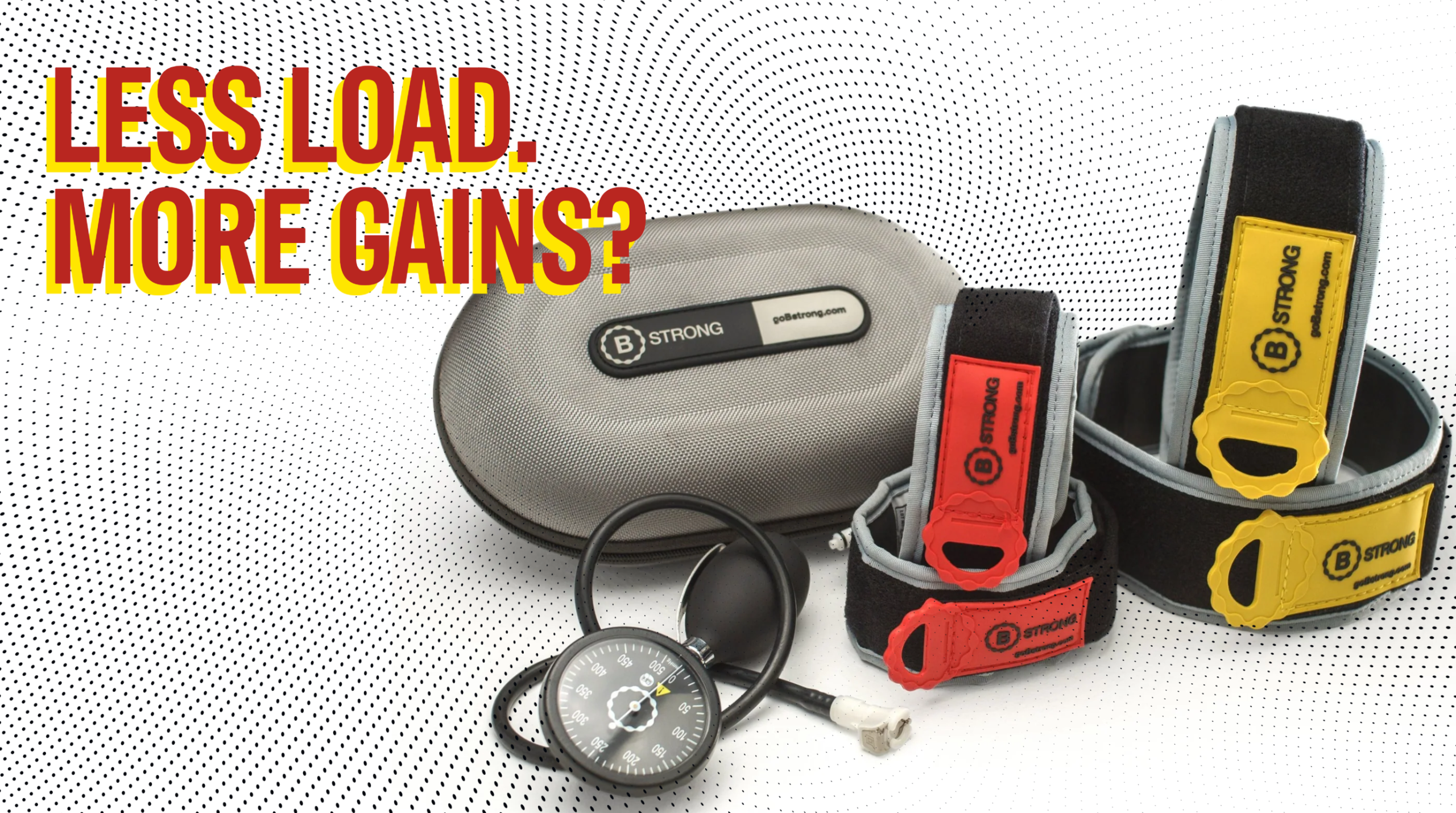
Never Stop Blood Flow: Use devices designed for BFR that limit*, not fully occlude, blood flow. Avoid blood pressure cuffs or makeshift bands. Joel recommends pneumatic devices like BStrong, which are designed to maintain some flow even if overinflated.
* Proper Placement: Cuffs only on the proximal upper arm or proximal upper thigh. Avoid joints or distal sites to prevent nerve impingement.
* Monitor for Symptoms: If you feel numbness, tingling, or pain, adjust or remove the cuff. You should always be able to feel a pulse distal to the cuff.
Contraindications: While BFR is broadly safe, certain conditions like clotting disorders (e.g., Factor V Leiden, hemophilia), sickle cell, active lymphedema, or being on strong anticoagulants are contraindications. Joel recommends a risk stratification model and always advises consulting a physician if you have any medical concerns.
Rollfast Integration: Speed, Strength, Longevity & The Longevity Audit
From a Rollfast perspective, BFR aligns perfectly with our pillars:
* Speed: By enhancing muscle recruitment and fatigue resistance, BFR can improve sprint ability and climbing power.
* Strength: It allows for significant strength gains with lower joint stress, crucial for Masters athletes fighting sarcopenia and maintaining resilience.
* Longevity: BFR stimulates increases in growth hormone, VEGF (vascular endothelial growth factor), and IGF-1—all vital for muscle growth, tissue repair, and overall anti-aging. It supports maintaining fitness into older age without excessive wear and tear.
Joel notes that his “super users” of BFR have seen positive changes in their blood panels. This aligns directly with how the Rollfast Longevity Audit can identify individuals who might benefit most (or need caution) based on markers like inflammation, hormonal balance, or coagulation profiles.
The Verdict: Breakthrough or Bullsh*t?
For Masters cyclists, Joel’s nuanced verdict is clear: BFR is not bullsht, and it can* be a breakthrough tool when used strategically and safely. It’s not a magic bullet, nor does it replace traditional training, but it’s a powerful adjunct.
“I think it’s got some really just neat utility,” Joel concludes. “Almost all of my knee surgery patients get BFR anymore… it’s a great way to get that quad growth and strength back without stressing their surgical integrity.”
Joel’s Final Advice:
If you’re nervous, start simple: “put them on and hop on a trainer for five minutes with them on at some medium level of restriction and just see what it feels like.” Choose reputable devices with controlled pressure, prioritize safety, and integrate it cautiously to complement your existing Rollfast training.
Listen to the full Podcast on Spotify
https://open.spotify.com/episode/1Empa5G08leV9Jth2QU6zn?si=oR9r7jeARo-1DTUckFyOxg
This post is based on an interview with Joel Novak, PT, CSCS, a leading expert in BFR training. Joel operates through his practice and online resources at myperformancerehab.com for personalized guidance, BFR kits, and therapy services in the Pendleton, Indiana area.
Matt Tanner is the founder and head coach at Rollfast Coaching. Christine Tanner is the Longevity & Nutrition Expert at MC Nutrition and Rollfast Coaching. Together, they help Masters athletes optimize performance and longevity. Learn more about the Rollfast Longevity Audit at coaching.rollfast.us

Related Posts
Why Your Gym Strength Never Reaches the Pedals (and How to Fix It)
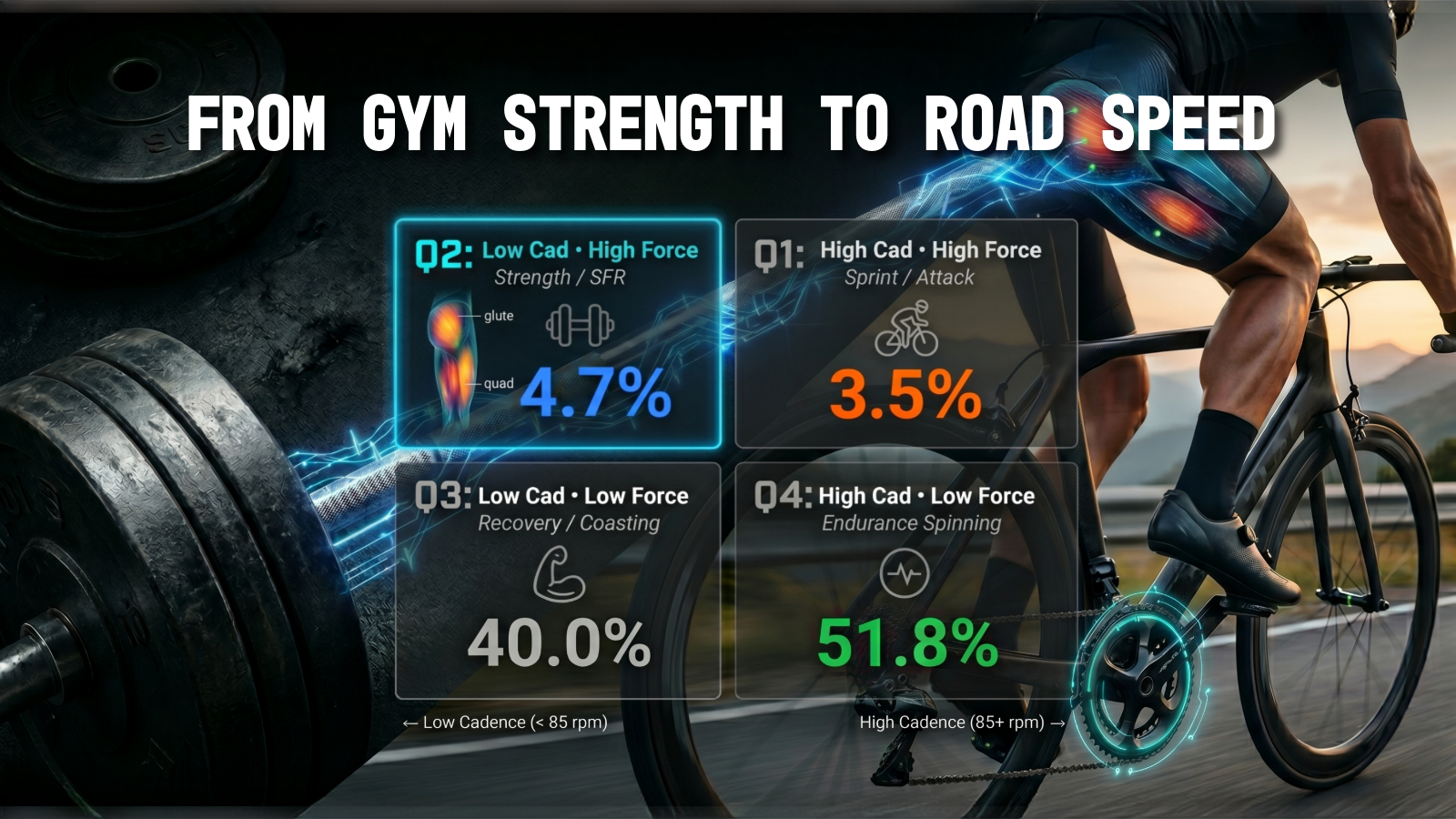
You’re strong in the gym, hitting personal bests on your heavy lifts. So why do your legs lock up and your power fade when the road pitches up? The problem isn't your fitness—it's a fundamental failure in force transfer. Most cyclists are stuck training in one dimension, leaving their raw strength trapped in the weight room. This post introduces the critical 4 Power Quadrant Framework,
Your winter squats won’t improve your summer sprint
Right now, squat racks are full of cyclists trying to build "winter power." But here is the hard truth: if you stop lifting when the sun comes out in March, those gains will be gone by your "A" race in July. Most cyclists treat strength as a seasonal fling, leading to a structural imbalance we call "The Cyclist's Deficit". At Rollfast, we reject the idea of

What I Wish Every Cyclist Knew About Strength Training
The world of cycling is full of unspoken rules, but there's one that needs to be broken: The idea that the only way to get faster is to ride more miles. At Rollfast, we know that peak performance is about a lot more than just your time on the bike. As part of our commitment to helping you Be Stronger, we believe in building a